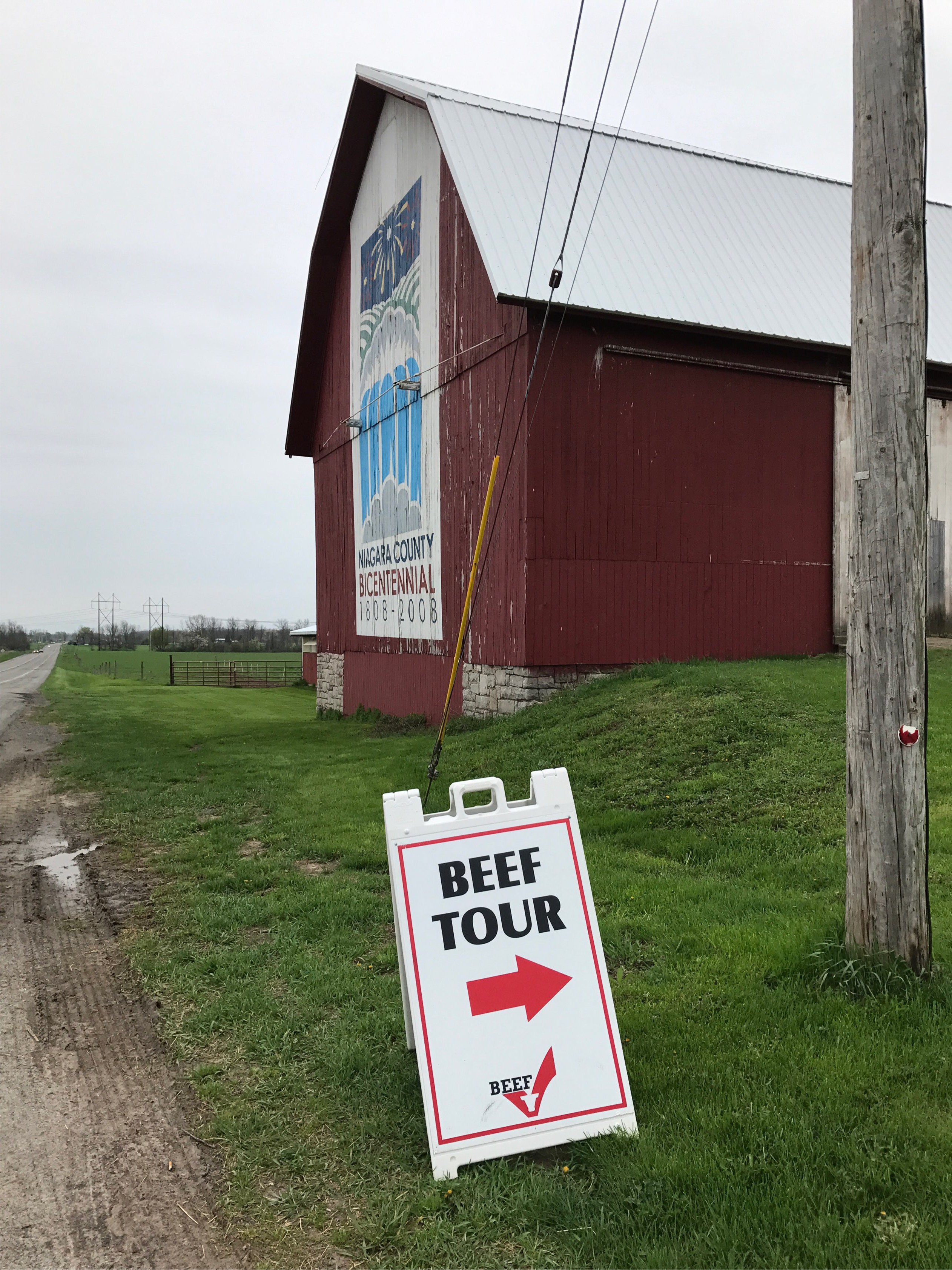
I went on a farm tour! Each summer, the New York Beef Council sponsors a few farm tours in various areas of the state for those of us in the dietetics profession. I attended the tour on Saturday, April 29 at Librock Farm in Gasport. They have about 20 head of cattle on the farm right now.

Did you know 99% of beef farms in New York State are family-owned? We exceed the average here by 2%. There are about 13,500 beef and dairy farms in New York, and members of the beef council try to visit a bunch each year. According to one of the farmers, it takes about .5-1 acre per head of cattle here, while out west (where most of the cattle farming is), it can take upwards of 50 acres per cow, depending on the size of the animal, average rainfall and type of grass.
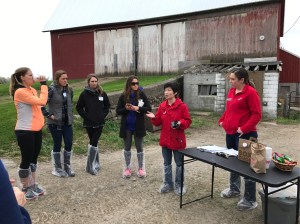
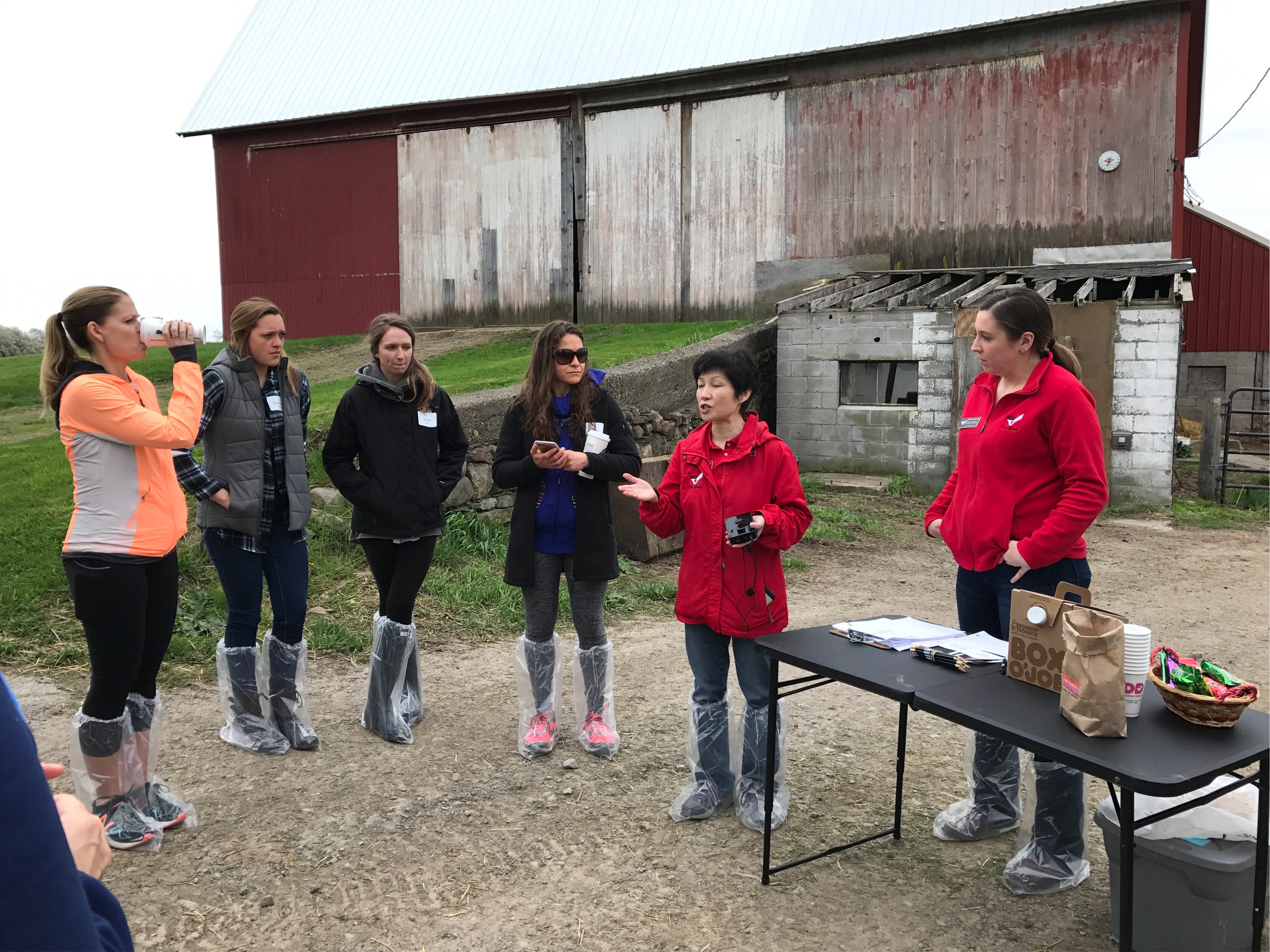
We each wore tall plastic ‘boots’ over our shoes for ‘bio security,’ which refers to protective measures to prevent the spread of infectious diseases or foreign species to crops and livestock. It’s likely more important for those going from farm to farm, and less-so for us ‘city gals’ not often found on farms. However, BONUS! No dirty feet!
During the morning, we learned about the lifecycle of a beef cow. On average, cattle are raised on pasture for most of their lives, then grain-finished for the last two months before slaughter. Cattle are ready for processing around 16-18 months old. Approximately 75% of a cow’s diet is grass during its life.

This cow, above, weighs about 1275 lbs and will be a youngster’s 4H project this year. The man in green, another local farmer and educator at Cornell University, discussed the use of antibiotics with us. He stressed that they are used incredibly sparingly and only for two main infections, one of which is pink eye and the other is similar to a common cold, and that often less than 1% of a herd has received the antibiotic. Additionally, there are ‘withdrawal’ periods unique to each drug that dictate when it’s safe to slaughter the cow.

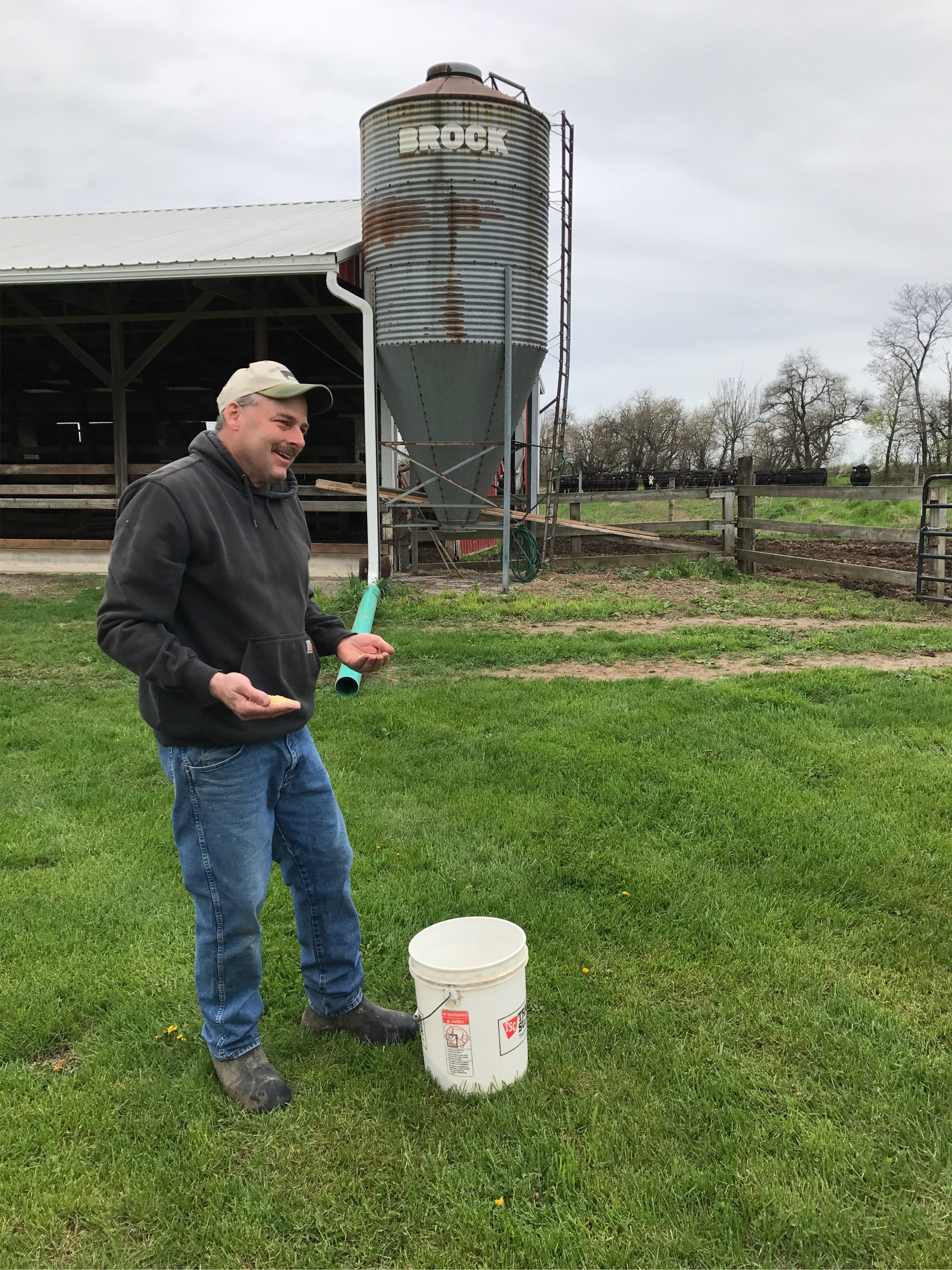
A cow on the Librock farm will eat about 20 lbs of grain (a mix of corn and wheat) per day for its last 60 days. Also, you know those giant white ‘marshmallows’ you see all over farms? It’s fermenting hay, called ‘silage’ and has increased protein and tastes like candy to cows.
After out tour, a visit to the pasture to see mommas and their babies and our antibiotic discussion, we moved inside for more info and lunch. We started with a blind taste-test between two pieces of beef: one 100% grass fed and the other grain-finished. While preference certainly is a personal decision, the grain-finished won for it’s increased flavor, tenderness, juiciness and visible marbling. I know from personal experience that 100% grass-fed meat tends to be harder to cook, as it has less fat.

After our tastings, we ate beef on weck with beef from the Librock farm. You know you’re in a group of dietitians when all the plates are piled high with green salad, the macaroni salad and cookies go untouched and everyone is drinking bottled water!
We started with a presentation on the nutritional benefits of beef, given by the lead RD for the beef council, Cindy Chan Phillips. While I’ve always been a big proponent of eating red meat (a good source of protein and many essential vitamins and minerals!) as part of a healthy diet, even I was surprised by some of the figures!
Check out these stats:
- There are multiple cuts of beef (3 oz servings) that have LESS saturated fat than a serving of olive oil (1 T = 2 grams sat fat). They include: Top Sirloin (1.8 g), Top Round (1.3 g) and Bottom Round (1.9 g).
- A 3 ounce serving of beef provides 25 grams of protein in only 154 calories. To get the same amount of protein, you’d need to eat 3 cups of quinoa (666 cals), 6 T of peanut butter (564 cals), 1 3/4 cups black beans (382 cals) or 1 1/2 cups edamame (284 cals). Research shows that we should be eating 25-30 grams of protein per meal, which is more than was commonly accepted (15-20 grams).
- For equal size and leanness, beef has a better nutritional profile than turkey. Beef provides 162 cals, 7.5 g total fat, less cholesterol and more protein, iron, zinc and Vitamin B12.
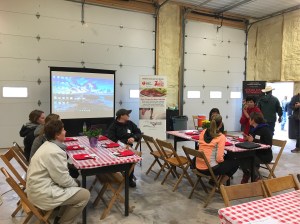
Lastly, we discussed GMO (genetically modified organisms) with a graduate student in the field at Cornell, and some common misconceptions about the beef industry. I think the biggest thing I learned was that ‘buying local’ can include buying from the supermarket. Each farmer decides how they want to sell their meat, and often chooses to diversify their avenues, selling some at a local farmer’s market, some at auction and some to a local distributor, who will then sell to your local Wegmans or Tops. You could be buying beef from down the street at a large chain store! Additionally, the farmers impressed upon us how skewed and biased cattle farming is often presented in the media. They really wanted us to know that all farmers truly love what they’re doing (both the Librocks have other jobs, too!!) and care for their animals.
I left the farm tour knowing a whole lot more about cattle farming, having even more reasons to encourage others to eat lean, red meat, and able to feel good about buying meet at my local grocery store…although I don’t remember the last time I did–we’re still eating the beef from the cow we split with friends last year!
Speaking of buying a cow… Many farmers offer consumers the chance to buy all or a portion of an animal for a very reasonable rate (I think we paid something like $4/lb). It’s a cost-effective option for those who eat beef and have enough room in a freezer to store the meat. I love the convenience of simply running down to the basement to grab a pound of ground beef or a roast!
Click here for an easy recipe finder for beef, and for more information about the nutritional profile of beef, including beef and heart health, click here.




 thehealthypineapple