Whole30

Today was Day 1 of my first Whole30.

-no SUGAR (unless it’s in a fruit or vegetable)

-no grains

-no dairy

-no legumes

-no alcohol

*There are a few other things on the ‘no-no’ list, like MSG and sulfites, but suffice it to say it’s basically Paleo on steroids.  Super restrictive.  Probably the only way I’ll curb my sweet tooth.

*Note: As a dietitian, I’m always wary of any eating plan that removes entire food groups.  However, by eating a varied selection of fruits and vegetables, a person can get all the nutrients grains and dairy provide.  Additionally, grains and dairy are often over-consumed in high-calorie, nutrient-poor forms (think crackers and ice cream) by many people, which doesn’t lead to optimum body weight or health.  Therefore, removing those two food groups isn’t as ridiculous as it sounds.  Difficult, yes.  Impossible, no. Lastly, the Whole30 removes these food groups for specific reasons (explained in-depth in the book) and also REINTRODUCES them after 30 days so individuals can assess their impact for themselves. End note.*

I’m super excited, even though I know it’s going to be really difficult sometimes.  A few years ago, I skimmed through Melissa Hartwig’s book, It Starts With Food, and thought ‘hell no!’ and slammed the book shut.

However, a few weeks ago, after seeing it mentioned somewhere on social media, it was all I could think about.  It’s amazing how different seasons of life change our perspectives.

The truth is, I’ve known for awhile now that I’ve needed a change.  A reset.  A shock to my system.  It’s been four years since I’ve been happy with how I look (thanks, school, for negatively impacting my body through stress…NOT), and more recently, I’ve realized how badly I feel when I overeat/eat certain things.  While I eat a lot of healthy foods, I also have about zero willpower when it comes to sweets.

(The recent blog re-org and trip down memory lane while reading past posts reminded me how great I feel when I’m eating better, not to mention how great I looked a few years ago. Sigh.)

These last couple months have been a double-whammy for me in terms of my health and routine.  First, I’ve been experiencing pain in my lower back since January (recently diagnosed as a bulging disc by an MRI) and an inflamed nerve in my elbow, both of which sidelined me from my usual high-intensity workouts and weight-lifting sessions.  (The cause: all that heavy lifting and landscaping last summer.  Boo.) At the same time, I’ve been stressed and splurging on sugary treats even more since my gym time decreased.  Go figure.

All that to say, I’ve been slowly accepting that I need to take charge over my diet in order to feel better–physically and mentally.  On a sleepless night Easter weekend, I read up on the entire Whole30 plan by the light of my phone and committed right then and there that I would start soon.

The next morning I asked Andrew if he’d do the Whole30 with me (lucky for him, he loves meat, hates cheese and beans, doesn’t do a lot of dairy and doesn’t crave sweets) and he agreed.  I bought the books that night and pored over them all Easter weekend, hopefully not at the expense of spending quality time with family–sorry, grandma!

As I said before, I’m really excited, because I know in my heart it’s what I need to get back on track.  I really DO love being healthy and fit, so I need to stop letting sugar win and take back control of what I eat.  In essence, I need to practice what I preach!

For extra motivation, I’m re-reading the Made to Crave devotional, on which I relied heavily a few years ago on a weight-loss journey.

I won’t be blogging what I eat every day throughout this 30-day period (like I did with our Paleo Challenge last year), but I will post some photos on Instagram (username: hollyrlayer).  I will, however, be posting a book review of It Starts With Food (not to mention all the other ‘diet’ books I’ve read) and perhaps some topical posts based on the program, like how to get calcium without eating dairy.  (You can, and it’s easy!)

How I Became an R.D.

I went back to school to become a Registered Dietitian (RD) and graduated in May 2015. Many of my posts during the four years I was in school focused mainly on what I was doing (and how much stress I was under). To read those posts, find them chronologically in the ‘Becoming an RD’ category.

For convenience, I’ve summed up the how and why of going back to school in this final school-related post.

I already had a degree (B.A. in Journalism from Penn State, 2005), so when I decided to go back to school to major in nutrition, I was shocked to find out it would take another four years. However, to become an RD, one must have all the undergraduate coursework and a supervised internship. See below for a list of my classes; much of the last year was spent in rotations at various healthcare facilities.

Fall 2011 (ECC)

CHEM 180 – University Chemistry 1

CHEM 181 – University Chemistry Lab

BIO 110 – Biology I

BIO 150 – Anatomy & Physiology

BIO 151 – Anatomy & Physiology Lab

PS 100 – Intro to Psychology

Spring 2012 (ECC)

CHEM 182 – University Chemistry 2

CHEM 183 – University Chemistry Lab

MT 141 – Statistics

BIO 130 – Microbiology

Summer 2012 (BSC)

NFS 102 – Intro to Nutrition (online)

Fall 2012 (BSC)

NFS 100 – Intro to Food Prep

NFS 110 – Applied Principles of Management in Dietetics/Food Service

NFS 200 – Applied Food Chemistry

NFS 230 – Intro to the Dietetics Profession

CHEM 321 – Principles of Organic Chemistry

Spring 2013 (BSC)

NFS 210 – Management in Dietetics

NFS 302 – Advanced Nutrition

NFS 315 – Lifecycle and Community Nutrition I

CHEM 322 – Biochemistry

Fall 2013 (BSC)

NFS 300 – Food Processing I

NFS 316 – Lifecycle and Community Nutrition II

NFS 401 – Medical Nutrition Therapy I

NFS 419 – Introduction to Clinical Practice

NFS 445 – Nutritional Care A (as part of the Coordinated Program)

Spring 2014 (BSC)

NFS 402 – Medical Nutritional Therapy II

NFS 405 – Principles of Nutrition Education

NFS 330 – Seminar on Complementary & Alternative Nutrition

NFS 310 – Personnel Management in Food Services

NFS 446 – Nutritional Care B (as part of the Coordinated Program)

Summer 2014 (BSC)

NFS 471 – Experiences in Food Service Systems in Healthcare (at Buffalo Mercy)

Fall 2014 (BSC)

NFS 403 – Medical Nutritional Therapy III

NFS 430 – Introduction to Nutrition Research

NFS 447 – Nutritional Care C (as part of the Coordinated Program)

Spring 2015 (BSC)

NFS 450W – Senior Practicum (Erie County Medical Center with Jennifer Oswald, RD)

NFS 451 – Specialty Practice (writing a business plan & nutrition communication projects)

NFS 448 – Nutritional Care D (Staff Relief at Buffalo General Hospital)

NFS 449 – Nutritional Care E (Long-Term Care at Genesee County Home in Batavia, NY)

So, why did I decide to go back to school?

My dream job is to be a health food writer.  Ultimately, I’d love to get published in something like Shape or Men’s Health or the like, but would be happy just helping people eat healthier food!  I’ve always seen myself writing long-term, but never quite knew what about.  It’s important to me to have a flexible job/career; we plan on having kids one day and I want to be able to be home more than I’m away.

It all started in early August 2011 when Kath revealed the “R.D. Me” section on her blog, which was basically how she decided to become a Registered Dietician and then how she did it.  I’d been reading her blog for about six months while also on my own weight-loss journey.

Actually, let’s back up.  Shortly after graduating with a Journalism degree from Penn State, I remember wishing I’d gone to school for nutrition.  Or creative writing. I just knew writing for a newspaper (at least in the traditional start-at-the-bottom-and-cover-the-midnight-fires-and-shootings) wasn’t it for me. I spent four years in the Air Force working in Public Affairs and as an Exec, using my degree some of the time and learning invaluable professional skills as well.  After I separated (because that wasn’t my passion, either), I took a year off to just relax and enjoy myself and not jump into anything right away.  I realize not working is a foreign concept to some, perhaps most, but Andrew really wanted me to and who’s going to argue with that?  I didn’t know what I wanted to do, but I DID know I didn’t want to just jump into the first Air Force civilian job on base that came my way.  I’m so glad I took the time off; I worked out like crazy, made some great friends and spent a lot of time de-stressing.  And believe it or not, I was quite busy most of the time.  It’s just the kind of person I am.  Between working out, taking care of a husband, animals and our house, cooking, baking, reading, working occasionally at the library and having a full social calendar, I was rarely bored.

During this time (from the time I got stationed in Ohio until we left) I’d lost weight twice (both times by counting calories) and gotten more interested in health and wellness.  I started eating healthier than I’d ever before and worked out with more intensity and purpose as well.  My running improved.  I started cooking and baking as much as I could from scratch, and using only whole foods on my menus.  Making the healthiest food possible became a passion for me.  (I wish I could say Andrew was as excited about healthy eating as I was; I’m still working on him.)

One year was well on its way to two when all of a sudden we were moving.  I’d started to feel like something was missing from my life, a sense of purpose, perhaps, but I’m thankful I wasn’t working before the move from Ohio to New York.

However, after getting settled into our hotel in New York, all those feelings of purposelessness and wasted potential came back with a vengeance.  At least in Ohio I had had a house to take care of; now I was cramped in our hotel, procrastinating on getting my resume and clips together to start looking for freelance writing work.  I’d always talked about wanting to do something with my life, more than just raise our future children and be a housewife.  I wanted those things too; that’s why I always said I wanted to contribute financially without having a traditional fulltime job.  Andrew has been pushing me to go to cooking school for years, but I did’t want to be a chef.  I did’t want to have a bakery.  (I’m a morning person, but bakery-morning is too early!)

And that brings me to reading Kath’s R.D. post.  I spent an entire afternoon reading her post (and all the links throughout!) and ended up with a bit of a headache and feeling like there was no way I could do what she did.  She spent 2.5 years going to school and doing an internship, and it just seemed too hard and scary and overwhelming.

That’s when it hit me–I wanted to be a food writer.  All that school seemed so daunting until I envisioned my name with the initials “R.D.” after it in the author’s info section at the end of an article.  I grabbed the nearest magazine, flipped to the front section featuring the bios of the contributors and shoved it under Andrew’s nose.  “That’s what I want to be,” I said to him.  I wanted to be a health-food writer.  I think I always knew this is what I wanted to do, I just never knew how to say it.  I mean, who else actually READS the contributor’s bios in magazines but me?

And then I slept on it.  And kept thinking about it.  And started Googling about being a nutritionist.  And then I made an appointment to speak with the Nutrition Department Head at the University of Buffalo.  At first I thought maybe getting my master’s in Nutrition was the way to go, but after speaking with someone in the department there, I learned that to be an R.D., you’ve got to do the undergrad coursework.  I also learned that while becoming an R.D. would be a lot of “extra” work that I might not need as a food writer, it really is a good plan in terms of opening doors and being the “expert” in the field of nutrition.

Now that I’m finished with school, I’m so glad I did it. The four years I was in school were the hardest of our lives thus far—for sure—but also the ones in which I grew the most. I almost can’t believe it’s all over; I have those ‘R.D.’ initials after my name now, and it makes me so proud of all of my hard work.

I’m currently working as a nutritional counselor to students at Buffalo State (my alma mater!) and I write a monthly nutrition column for the East Aurora Advertiser. I also teach fitness classes at our local YMCA. I’m not a major freelance nutrition writer—yet—but I’ll be working on it.

Wellness 101

Since childhood, I’ve struggled with my weight and eating habits.  I’ve come to truly enjoy working out, and food and nutrition have become major interests of mine, as part of a commitment to leading a healthy lifestyle. By incorporating healthy-living principles into my life, I’ve never been happier or more satisfied with how I look and feel.

I recently lost 20 pounds just by counting my calories, which made me more aware of what and how much I was eating.  It was a shock to realize that despite my regular (and quite strenuous) workout routine, I was carrying that much extra weight.

To read my post on the day I reached my goal, click here.

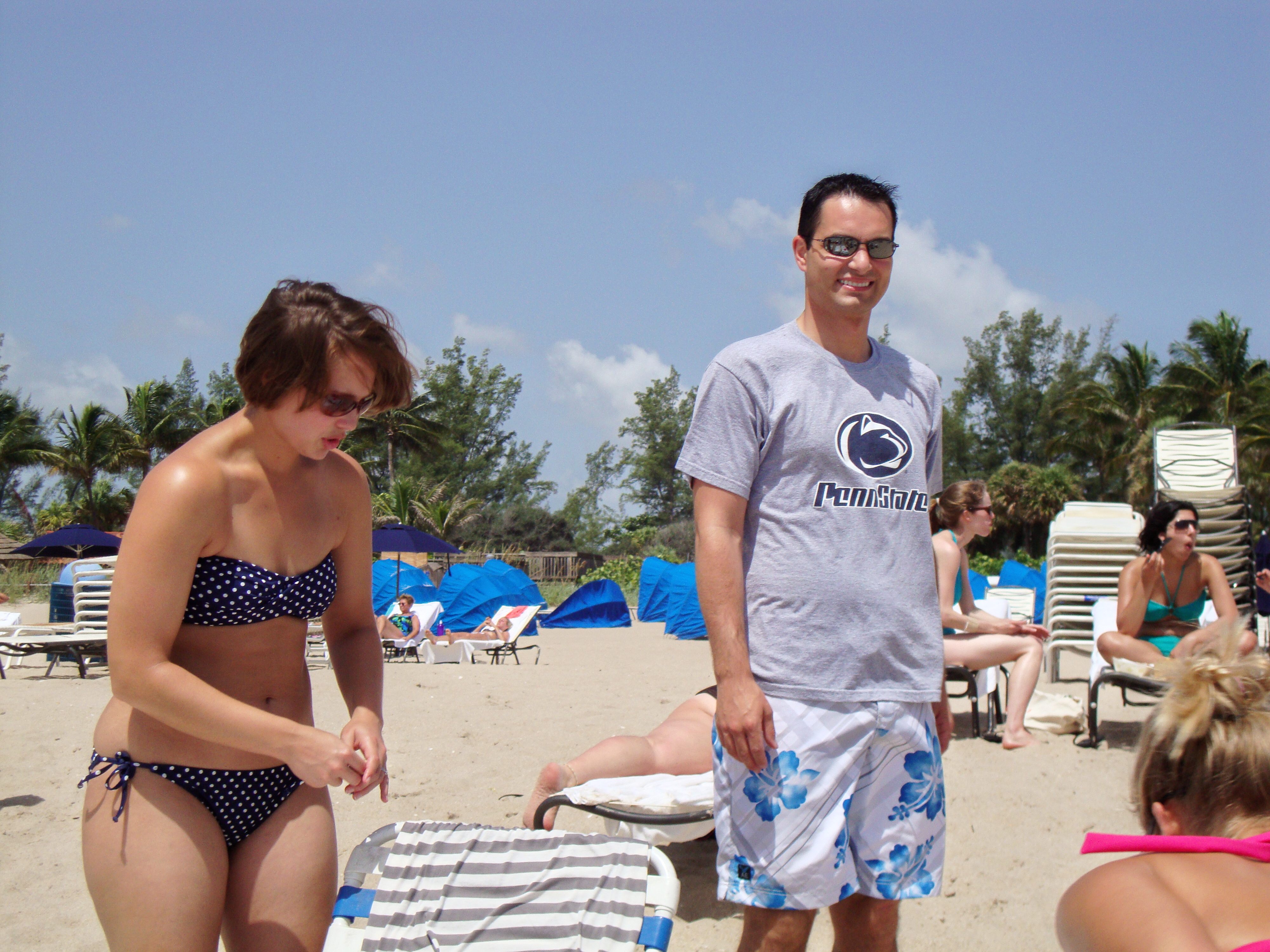
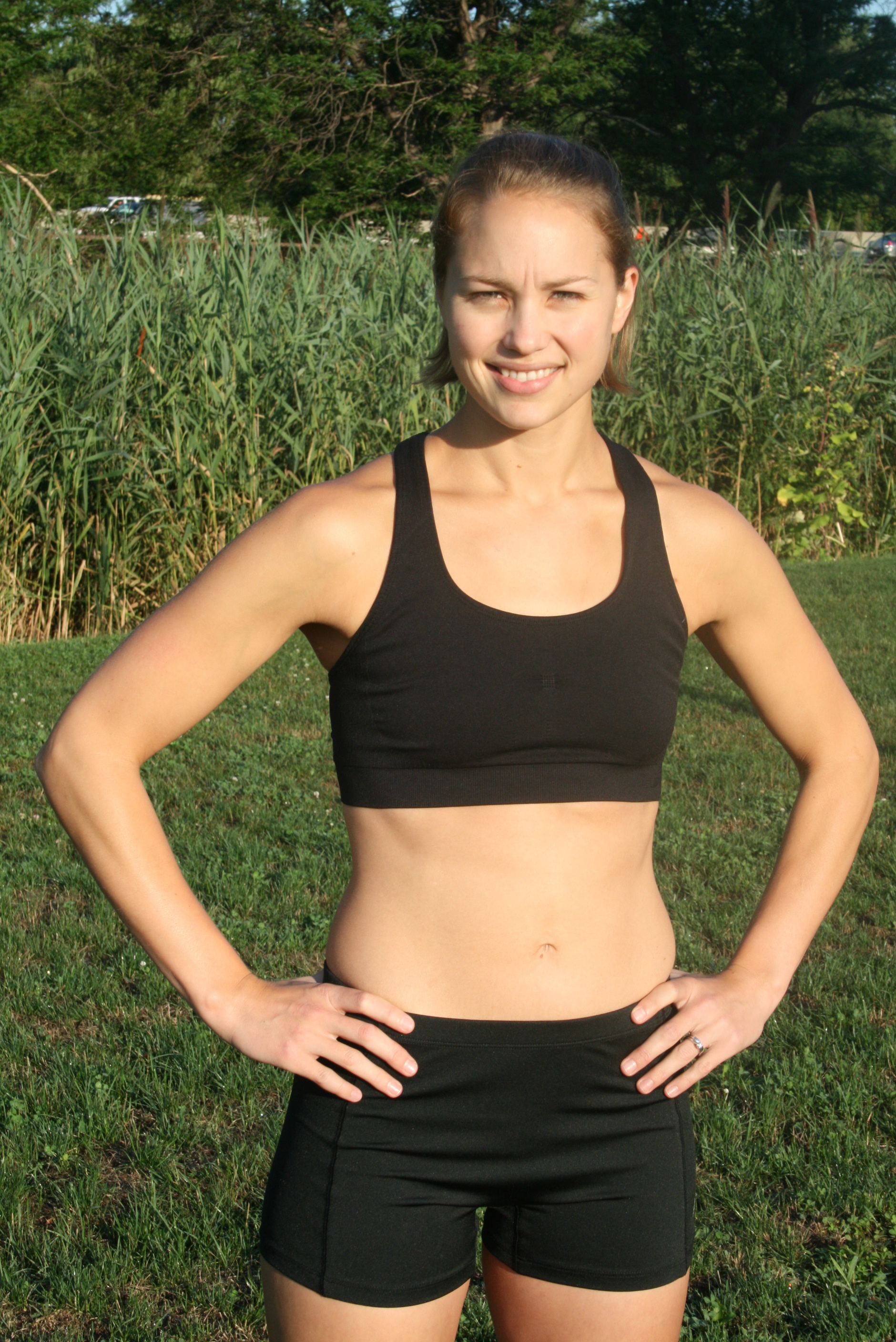
Here are some before photos:

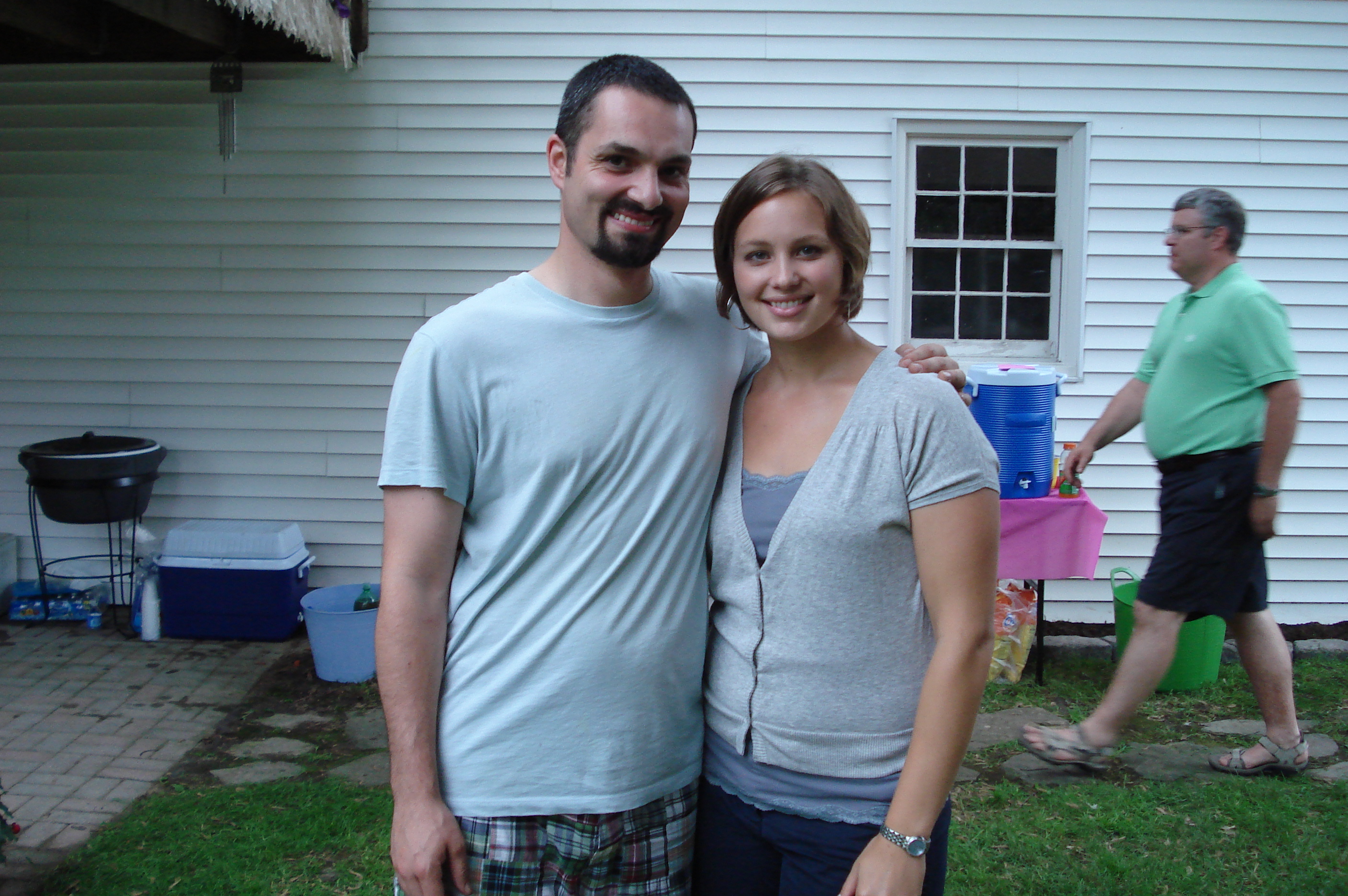
And after:
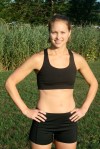

It took about 4-5 months of daily calorie-counting to accomplish my goal, and I did it in the healthiest way possible.  I didn’t give anything up and nothing was really “off-limits.”  I didn’t switch to diet sodas or “fake” food.  In fact, I’ve never eaten better food than I do now!  Losing weight and being healthy isn’t about a temporary diet; it’s a lifestyle and a passion of mine.  I’m not a doctor, nutritionist or exercise physiologist, but here are some common-sense principles I’ve adopted to become healthier.  Give them a try!
Food Ideas

-Most important: Be open to new foods.  Try barley, quinoa or millet.  Give tofu a chance.  Maybe you’re still getting used to zucchini or whole wheat bread and pasta–keep trying it, and other things like it.  You’ll can’t know if you don’t like something until you try it.

-Produce:  Eat it all!  Stock-up on seasonal fruits and veggies and keep “portable” fruits like apples and bananas in the kitchen.   Alway have stuff in the fridge to make a salad and don’t forget to “eat the rainbow.”

-Carbs: Start with whole-wheat bread and pasta (if you aren’t eating them already) and then incorporate other grains, like couscous, wheat berries and brown rice.  These are all filled with good-for-you carbs, fiber, vitamins and minerals, and are less processed than their “white” or “bleached” counterparts.  (Who wants to eat bleach?)

-Proteins: It’s more than just meat!  Hummus, natural peanut butter, lowfat plain yogurt, kefir, fish, chicken, pork and lean beef, tuna, eggs, edamame, lowfat cottage cheese, beans and nuts are all sources of protein.  As long as you watch your serving size and fat content, these proteins will help keep you full throughout the day.

-Smart splurges: We still need to enjoy what we eat.  Daily “splurges” can include individually wrapped dark chocolate, whole-fruit pops, popcorn and really, just about anything in moderation.  Focus on whole foods, like a homemade muffin or cupcake made with wheat flour, and keep single-serving or lowfat ice cream (or other treats) for times you need something sweet.  Less frequently, allow yourself a true indulgence, like an ice cream sundae or cheesecake.  Again, it’s more about portion-control than what you eat.

-Water:  Drink it and almost nothing else.  Soda and juice are pretty much just sugar.  Limit alcohol to special occassions.  Experiment with different teas (with just a teaspoon of honey) if you need something other than water.  There are absolutely fantastic flavors out there, and some are really good for you.  (And I don’t mean the powered kind… loose-leaf or the kind you have to brew!)
Changing Your Eating Habits

Maintaining a healthy weight is part of a healthy lifestyle.  Here are some ways to incorporate smarter food choices into your day:

-Combine some produce and a protein for a snack, like an apple and a cheese stick, or cut-up bell peppers with hummus

-Include high-protein picks like hard-boiled eggs or tuna in your salad to keep you full

-Give spinach a try (instead of lettuce) in salads and on sandwiches for a boost in nutrition

-Try new things like sprouts and edamame in salads

-Don’t drink your calories!  Stick to water and only occasionally enjoy a soda, juice or alcoholic beverage

-Learn to like plain yogurt–top with fruit, granola and a drizzle of honey

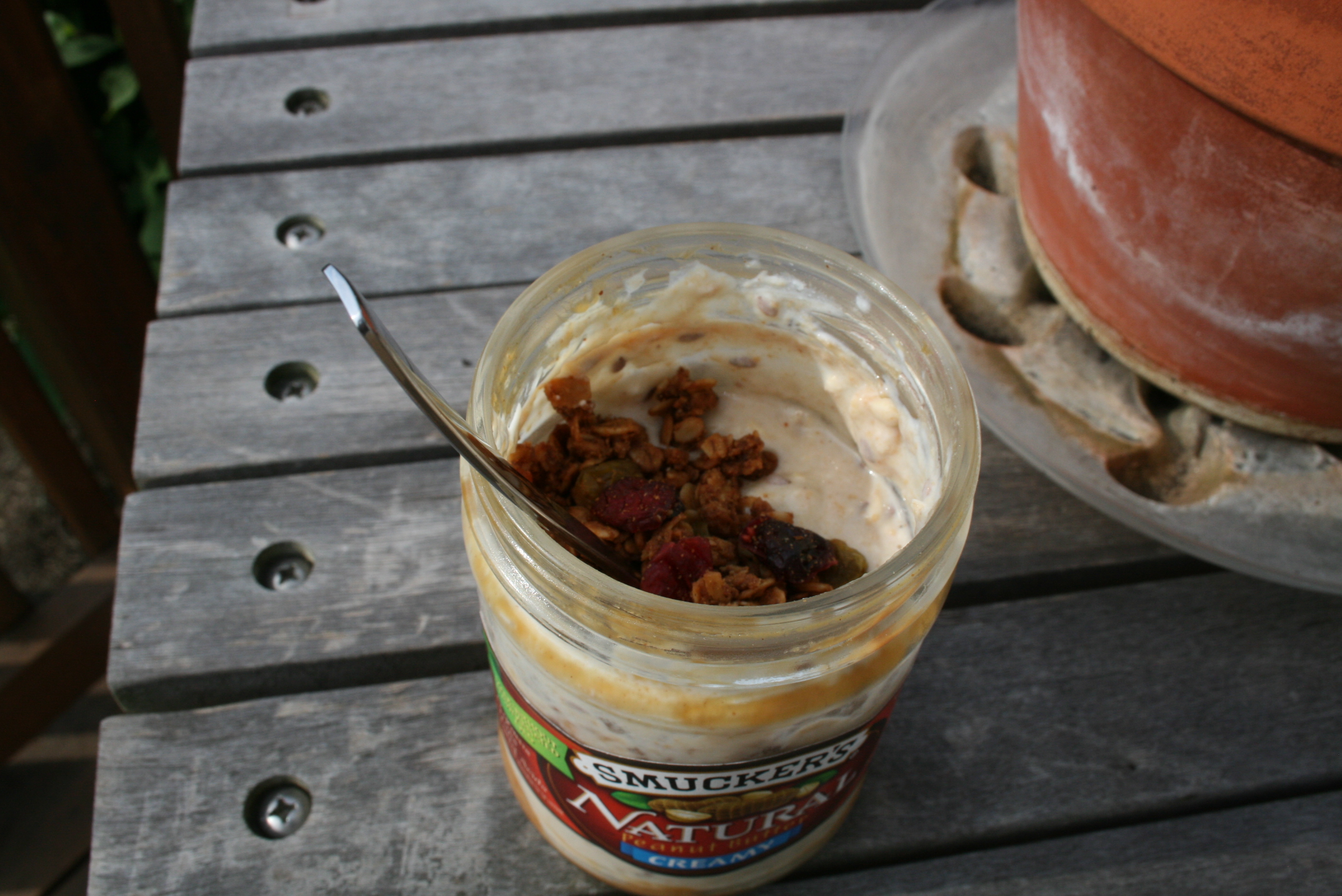
-Mix protein, like peanut butter, yogurt or cottage cheese, into your morning oatmeal to make sure it fills you up

-Pass up pre-packaged items (like cookies and crackers) that say “Fat Free” on the box–often they have more additives and calories than the regular kind.  Better yet, pass up pre-packaged altogether!

-Start baking with whole-wheat flour and swapping in applesauce or yogurt for part of the fat

-Don’t be afraid of butter!  Real food is always best

-Get a diet scale.  They’re super convenient and really cheap (less than $5) and perfect for measuring out portions of chips, crackers, nuts, meat and cheese.  They typically only go up to one pound; larger digital scales are better for cooking, baking and canning.

-Shop the perimeter of the grocery store: produce, dairy, frozen foods, meat and bread.  Avoid the inner aisles except for essentials, like baking supplies, spices, dried fruits, nuts and tea.

-Stop eating before you’re full.  I realize that this seems like a no-brainer, but I’ve spent my life overeating.  Learn to listen to your body and strive to feel “satisfied.”

Again, enjoy what you eat.  If you’re eating healthy, real food, it’s going to do good things for your body.  If you want a brownie, eat one.  Is it OK to buy a package of Oreos every once in awhile?  Definitely.  The most important things about eating well are portion control and eating real food.

Exercise Ideas

Do something, anything, to get moving.  And do things you enjoy; if you have fun while exercising, you’ll be more likely to continue doing it.

-If you are a beginner, want a group setting or are looking for personal training, join a gym.  They have plenty of workout classes and trainers who can help you design a program that you’ll enjoy and from which you’ll benefit.

-Get outside!  In good weather, get out and enjoy it!  Take the dog for a walk or go for a bike ride.

-Start running.  All you need is a good pair of shoes and appropriate clothes.  No fancy equipment or gym membership required.  If you can’t run yet, start walking.  If you need assistance, look online for beginner runner workouts.

-Find a sports league through your office or get friends together for ultimate frisbee, biking or hiking.

-If you have a treadmill, use it!  If it’s been a clothes hanger for six months or more, make the hard decision to start using it or get rid of it.

-If you don’t lift weights yet, start.  Whether you’re a guy or a girl, weight-lifting is crucial not only for maintaining a healthy weight, but also for bone health.  The more muscle you have, the more calories you burn while working out AND while resting.

-I find working out in the morning to be the only way to go, myself, but do what works for you.  Find an activity or group of friends and work it into your schedule.  Once you have, stick to it.  It takes a few days, even a week or so, to get used to your new routine–keep going and it will get easier!

Wellness/Balance

Life isn’t just about looking good in a pair of jeans, but it sure helps.  I don’t say that because I think the only way to have a “good” life is to be thin, but because being healthy on the inside will equate to being healthy on the outside.

-First, and most important, is my faith.  Having Jesus Christ as my Savior gives me hope and strength for each day and also defines who I am as a person.

-Surround yourself with people who love you and who support you.  While it’s certainly possible to meet your goals in the face of adversity, it’s not as easy.

-Seek out things that interest you.  Whether it’s kayaking or knitting, find something and do it.

-Take time for yourself every day.  It can be first thing in the morning, a break in the afternoon to take some deep breaths and enjoy a snack, or maybe reading a book before bed.  Just make sure to have even five minutes of “quiet time” during the day.

-Do something for someone else.  This can be mentoring, volunteering, or just helping a neighbor.  Reach out.

-Weigh yourself.  If you don’t have a scale, you can’t keep your weight in check.  Aim to weigh once or twice a week and if you see the numbers creeping up, you’ll know you need to make some smart choices for the next couple days.