H/B/F 2017: Amsterdam on my own

One day while Andrew was working, I decided to go into Amsterdam on my own to do some exploring. I’d planned my itinerary the evening before, selecting agenda items that Andrew wouldn’t also want to do.

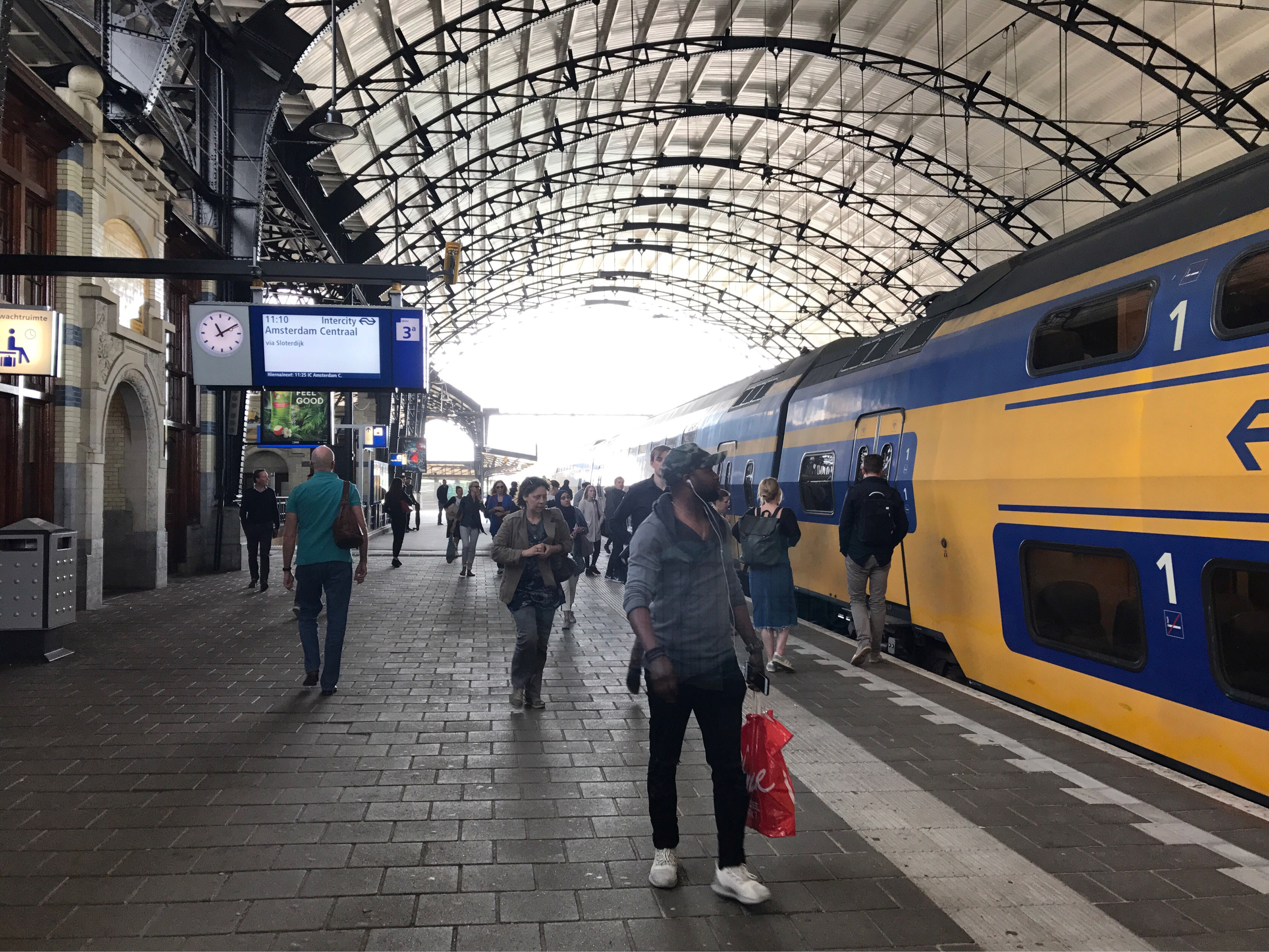
I caught the 11:10 am train out of Haarlem and was in Amsterdam within about 20 minutes.

I made a beeline for the Museum of Bags and Purses, on foot and armed with a map. I prefer to walk, and found navigating the city incredibly easy. Along the way, I found a square dedicated to Rembrandt:


While a ‘purse museum’ might sound a little silly, it wasn’t simply a collection of high-end bags. The collection contains some of the earliest bags, including gaming bags and bags for men (this was before pants were made with pockets), in addition to unusual bags and haute couture. (I’ve come to the conclusion that I’m a ‘purse-girl,’ and I’d rather embrace it than fight it. In fact, I seem to get a new purse on each of these extended trips to Europe…)

This bag and heels are made of TOAD:

The museum featured many historical and/or functional bags, like these picnic baskets and luggage trunks:

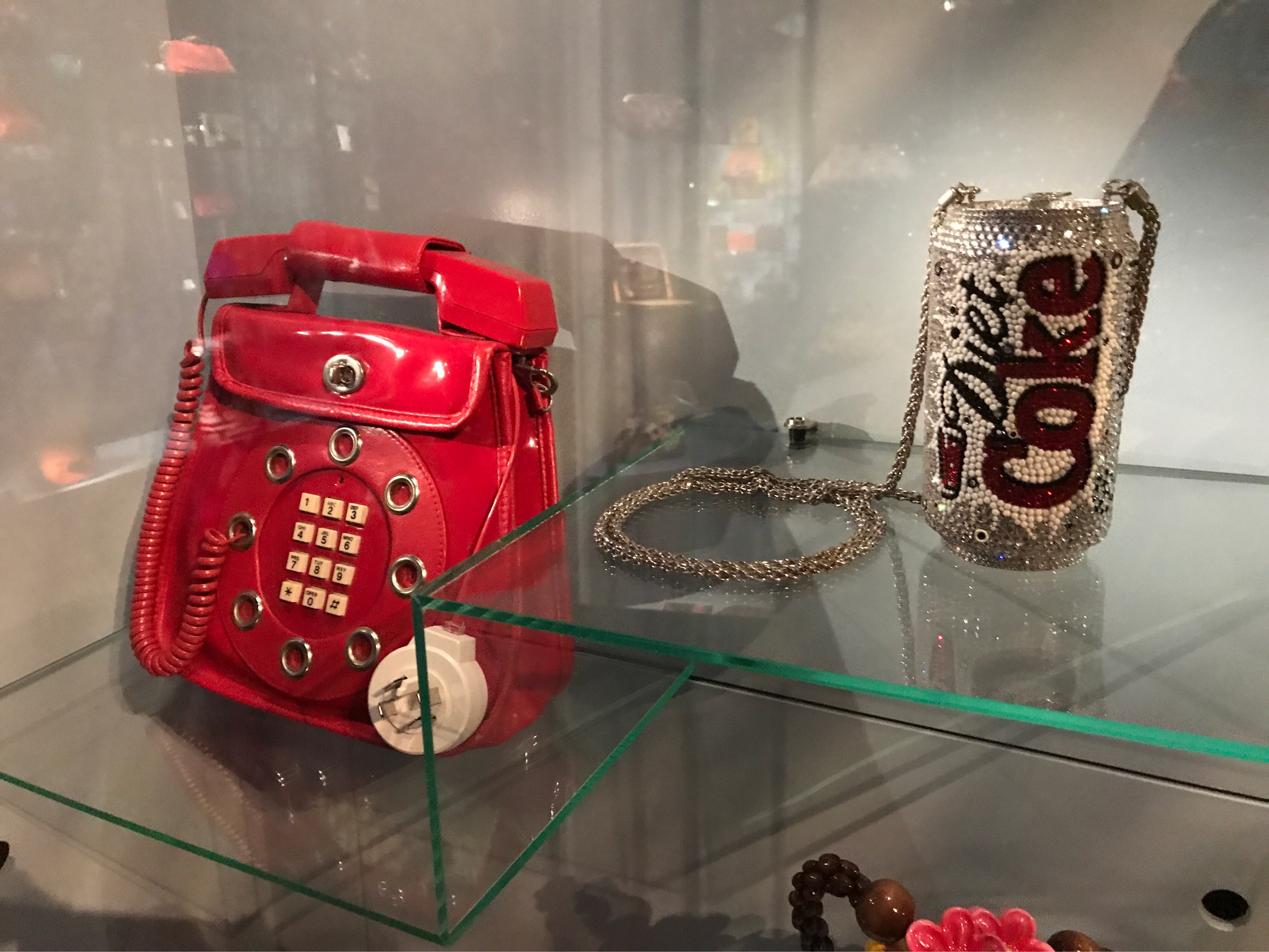
The cabinet I liked best was the ‘unique’ collection, including a bag made out of a soda can, one decorated as a phone and many in interesting shapes and fabrics. The museum also owns Margaret Thatcher’s gray purse, that apparently has a story of its own.
After the bag museum, where I picked up a souvenir in the form of a tiny pineapple-shaped coin purse from mywalit (it’s an Italian brand I found on a trip there years ago, yet never found an item from the line I wanted to buy), I walked another 15 minutes or so to Museumplein. My next agenda item was the Stedelijk Museum, which is Amsterdam’s modern art museum.

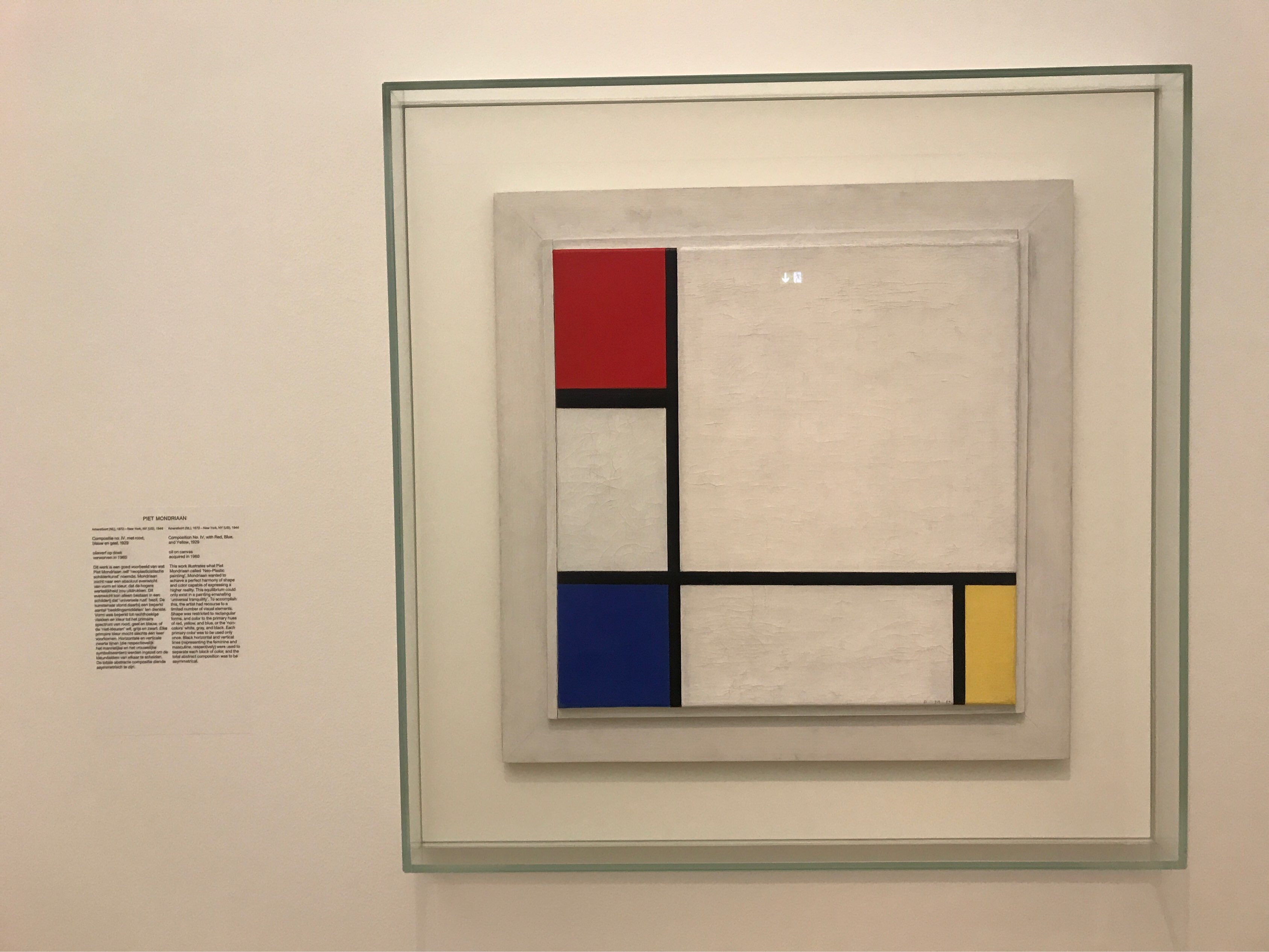
I was pleasantly surprised with their main collection, which included works by many of the later 1900s artists, like Piet Mondrian, Marc Chagall and Leo Gestel.  I tend to like modern art a little more than Andrew, although I’ve found some modern art museums to be a bit too ‘modern’ for my taste.
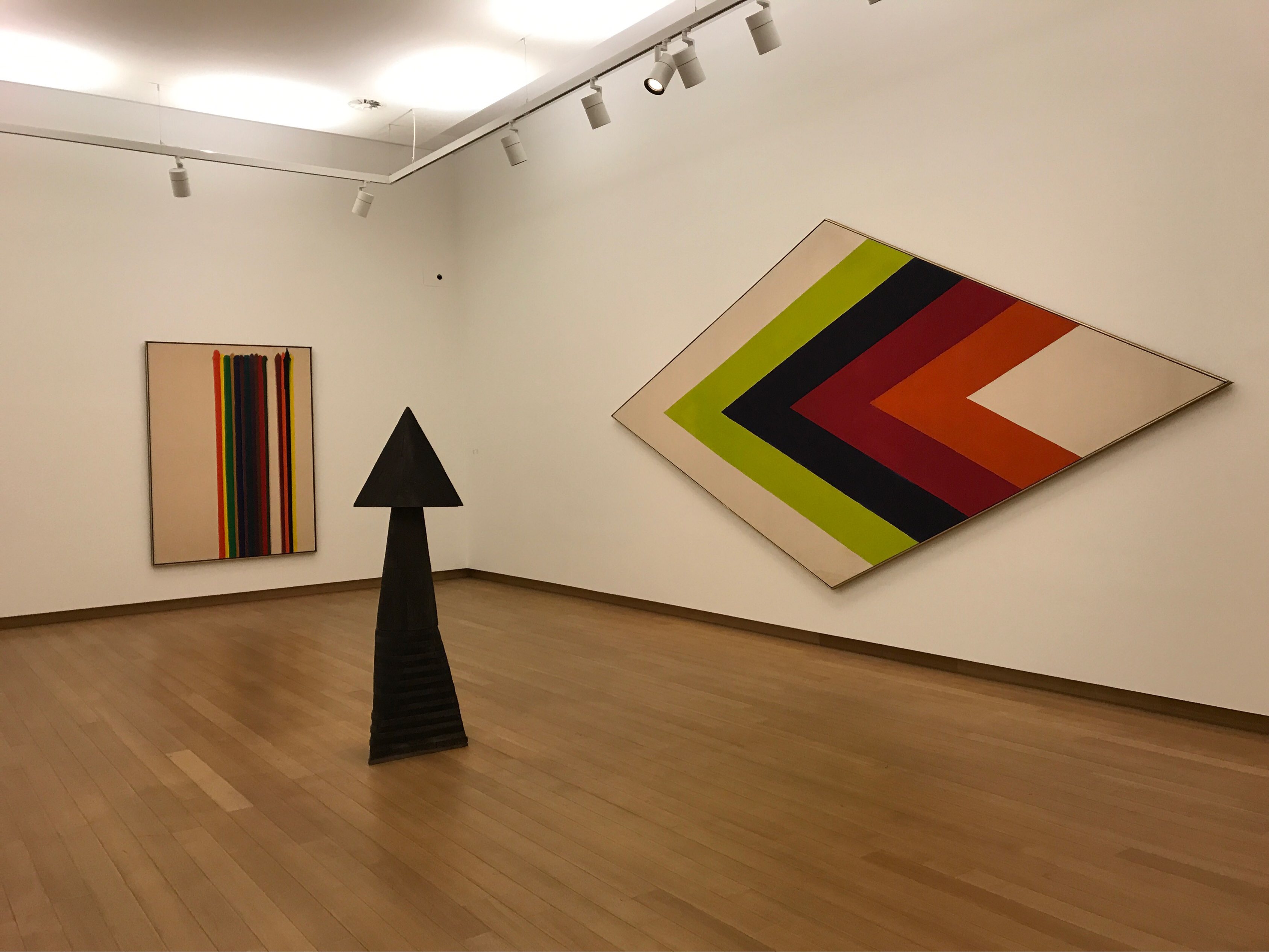


My last must-do item was a cheese tasting class–something Andrew would never do! I caught one of the many trams running from there (Museumplein is an area where three major museums–Rijksmuseum, Van Gogh and Stedelik–are clustered, along with a busy square and some shopping) back up toward the train station as I was probably a 30-40 minute walk and I wanted to be early to the cheese tasting as I hadn’t yet bought a ticket.

Rick recommends the Reypenear cheese shop for their tasting classes, and it did not disappoint. I was able to squeeze into the class and sat with a little Aussie family of three (seats are two per table).
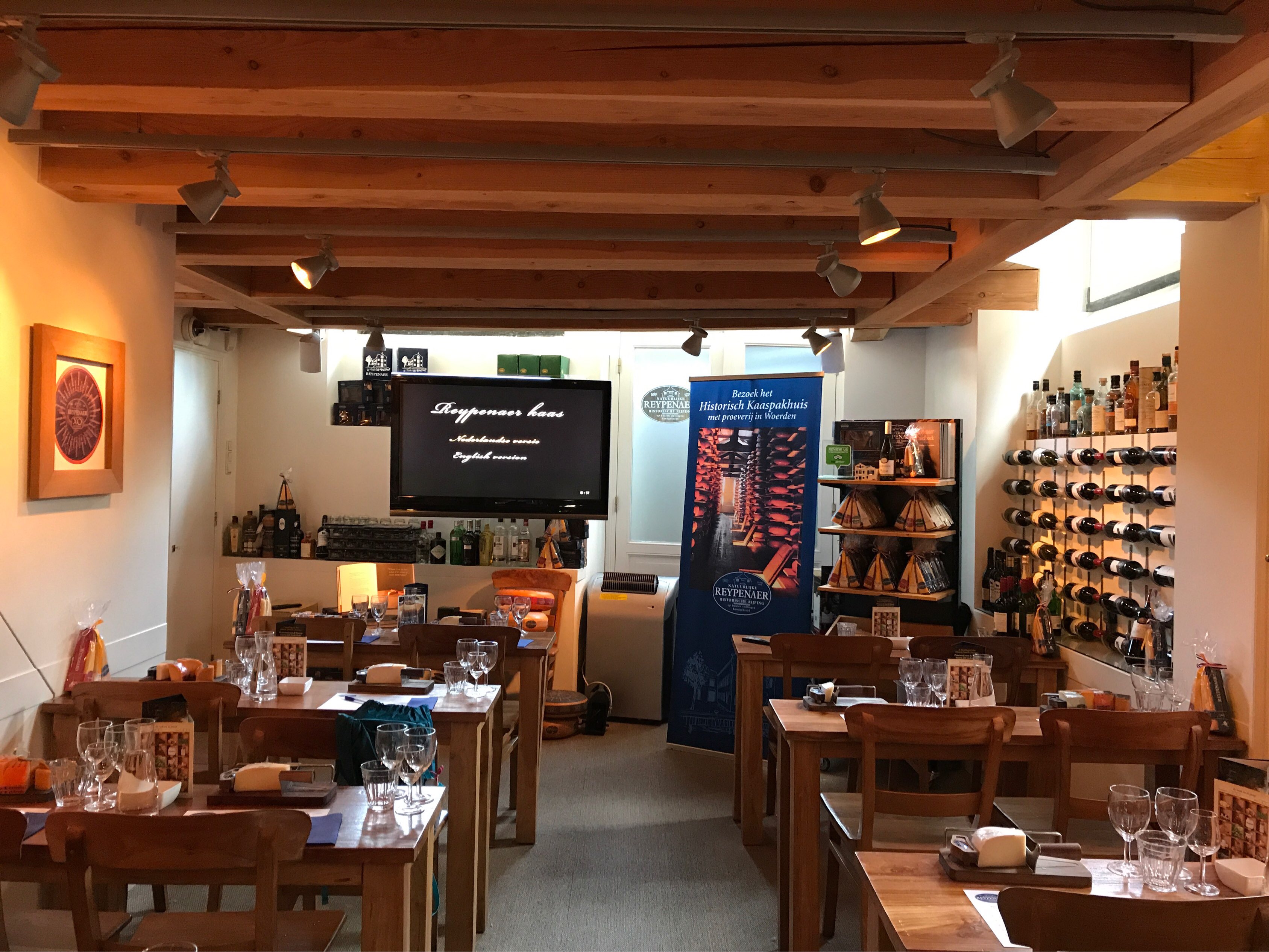
The tasting was much like a wine tasting (we paired each cheese with a different wine), as we started with the mildest and youngest cheeses (two goat) and worked our way to cow cheeses that were older. Along the way, our host explained the open-air ripening process. This was perhaps the event I most looked forward to of the entire day and was so glad I had the opportunity to do it.

After the cheese class, I walked over to the Jordaan district, which is becoming a trendy place to eat, shop and live. Along the way, I meandered through the ‘Nine Little Streets’ shopping district and I found my way to one of the Rick-recommended restaurants there.

Just as I ordered my dinner–mahi mahi with red and yellow beets, coconut risotto and truffle cream–a French couple sat down next to me and we started to speak! (In French.)  Obviously, my conversational skills are limited, but I was able to tell them what brought us to the Netherlands, about our previous trips in France and why I was learning French. They were so kind to indulge me and let me practice with them.

After another glass of red wine and a raspberry tart with coconut ice cream, I headed back up to the train station to catch a train back to Haarlem.  I’d say I had an incredible day in the ‘big city’ on my own; I was able to do all three things I wanted to, navigated quite easily and enjoyed myself the entire time.

H/B/F 2017: rijsttafel

Andrew, Frank and I enjoyed a ‘rijsttafel’ (“rice table”) the other night at one of Rick’s recommended Indonesian restaurants here in Haarlem.  A little history: Indonesia was a Dutch colony until World War II and the area was known for their spices (think ‘spice islands’).  We’ve seen more than the usual amount of Indonesian places here so far in Holland.

A rijsttafel is designed for two or more diners and includes a large bowl of white rice and multiple additional dishes, all with unique flavors.  I counted about 5 or 6 meat dishes (beef, chicken and pork), 4 or 5 vegetable dishes, a plate of puffed rice ‘crackers’, three hardboiled eggs in a tomato sauce and three ‘dumplings’ of some sort.

Rick advises you keep your rice ‘clean’ so you can use it with each different dish, or to cool your mouth (a few things were spicy). I’m glad I did!  I think my favorite dish was the green beans cooked with red peppers (closest to the near end of the table in the first photo), as well as a few others  Everything truly was great!  We washed it all down with Indonesian beers.


H/B/F 2017: Corrie Ten Boom, Zandvoort, (a little) Amsterdam and Den Haag

Here’s a few more things I was up to last week:

I made sure to visit the Corrie Ten Boom house here in Haarlem.  If you’ve never heard of her, think of her story as the other half of the Anne Frank story (her hide-out is in Amsterdam, we plan to visit next week).  Corrie came from a long line of believers here in Haarlem, who (obviously) were sympathetic to the plight of the Jews during World War II.  Corrie, her older sister, Betsie, and their father hid Jews in what they called ‘the hiding place’ in their home here in Haarlem. They even had an architect friend come in and build a real brick wall in their home (it took a week to smuggle in the supplies) to create the small space needed.

Tours are free, led by volunteers and incredibly moving.  It’s clear their main purpose is to evangelize while telling Corrie’s story.  She, Betsie and their father were arrested under suspicion of hiding Jews and sent to some of the worst concentration camps in Germany. Thankfully, the six people hiding at their time of their arrest were aided by a sympathetic policeman and led to safety.  Betsie and their father died in the camps, but Corrie was inexplicably released and vowed to travel the world spreading the Gospel.

I was moved to tears (along with many others) by the end of the tour, and was happy to obtain my own copy of her book–The Hiding Place–there at her home.

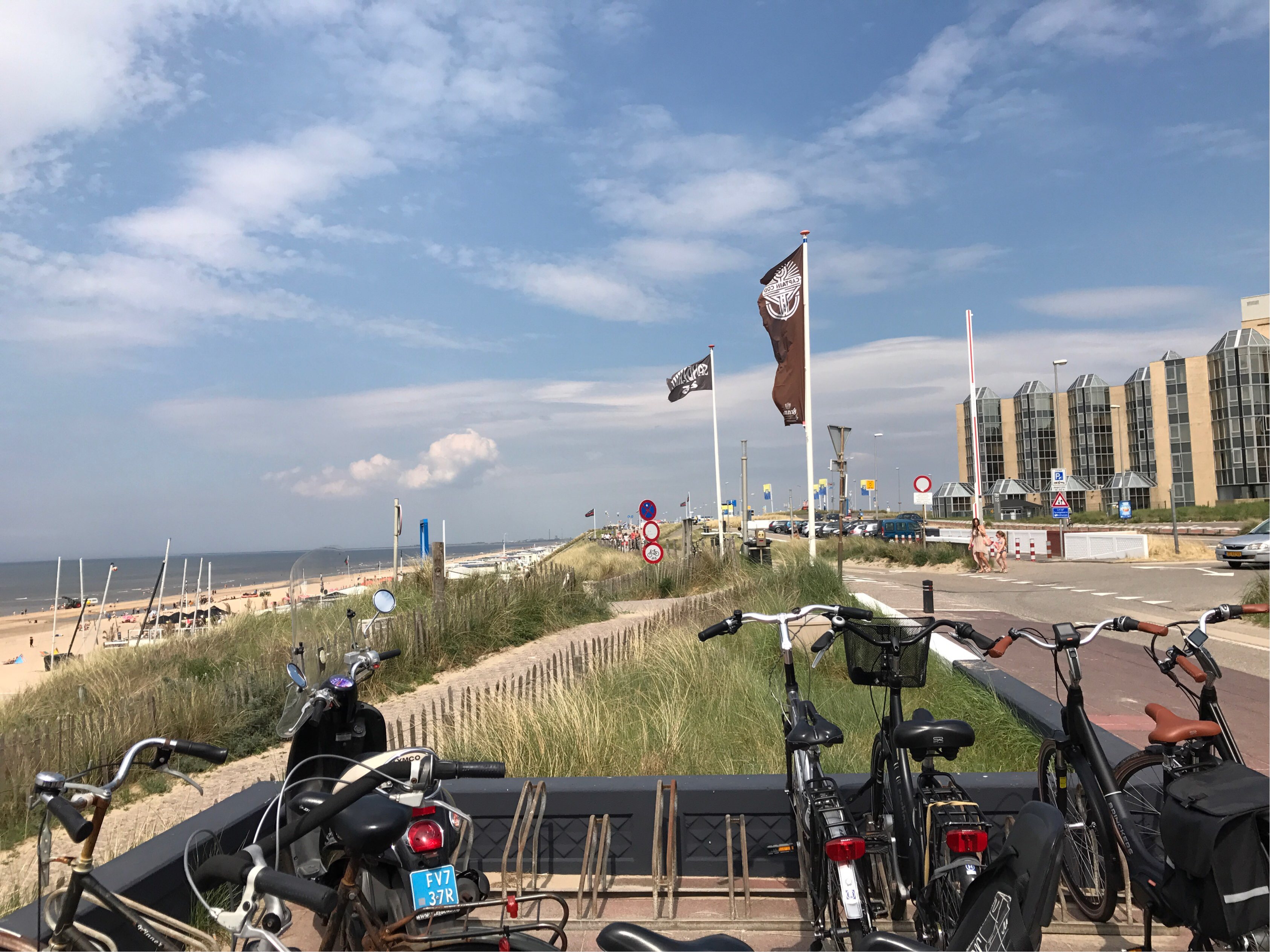
Later that afternoon, I rented a bike and headed out to Zandvoort, a local beach about 45 minutes away by bike.   The area was experiencing record temps, so anyone who could be was out on their bikes.

I copped a squat at a recommended beachside bar and drank some cold brews, snacked on a pineapple/orange ‘cookie’ I got at a local health food store and caught up on some magazine reading.  (Note to self: the pineapple orange flavor combo was fantastic–must replicate at home!)

That evening, Andrew and I took a train to Amsterdam to meet his co-worker from East Aurora, Frank, for dinner.  If you’ve never seen the biking action here in Amsterdam, it’s certainly an event to witness.  According to our guidebook, the average family has four bikes, and in the city it’s most certainly their main mode of transportation.  They even have parking ramps just for bikes!

Andrew, Frank and I grabbed a beer before finding a place for dinner.  Our view:

Andrew played around in a passageway with a beautiful ceiling:

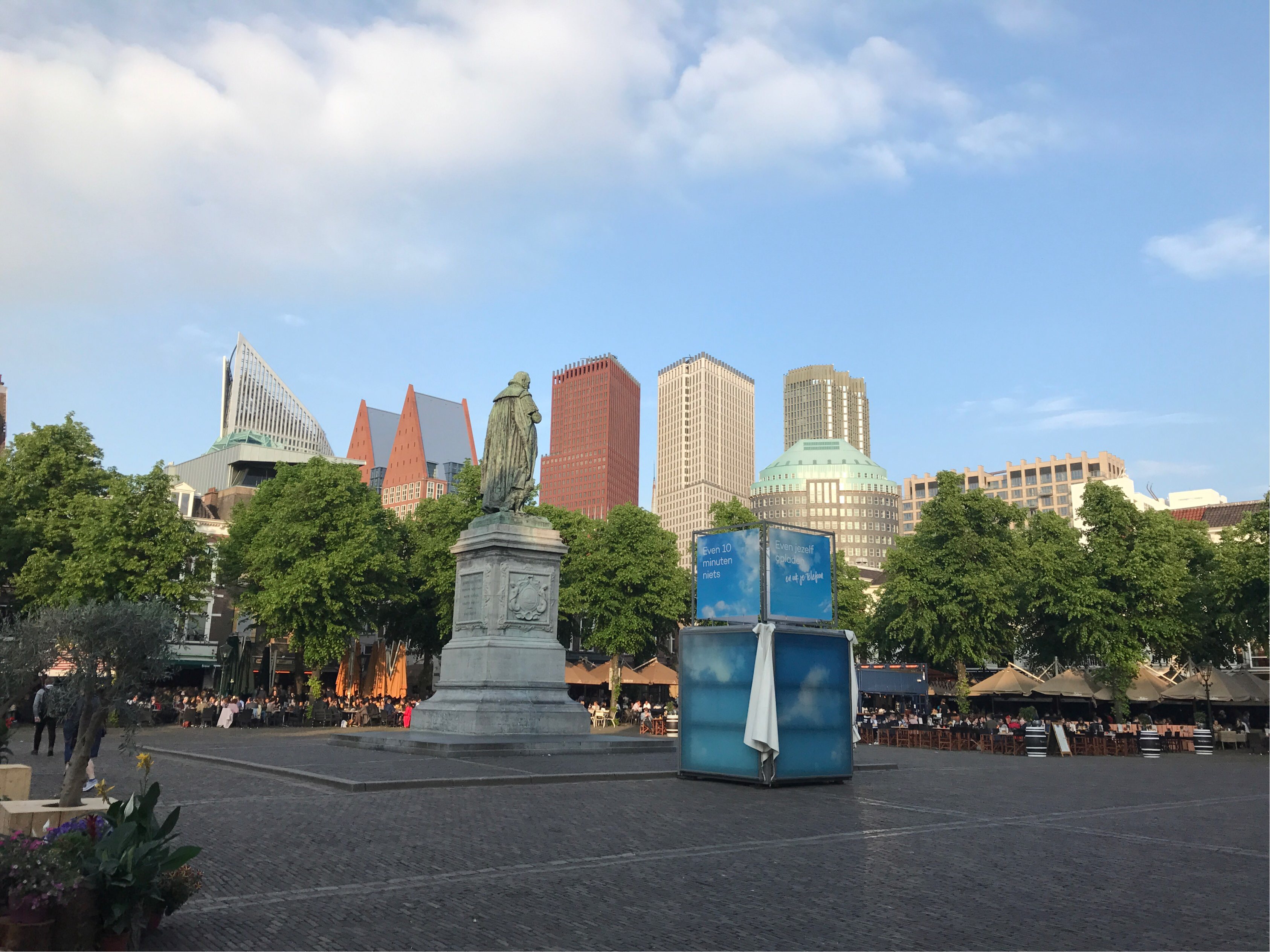
On Thursday, I jumped on a train to Den Haag  to meet Andrew there to visit the Mauritshuis, their art museum featuring Rembrandts, Vermeers and Frans Hals, Haarlem’s golden boy.  It is home to Vermeer’s ‘Girl with a Pearl Earring,’ its biggest attraction. I loved the juxtaposition of both the old and new architecture in this big(ish) city full of tall buildings, people in suits and young professionals.

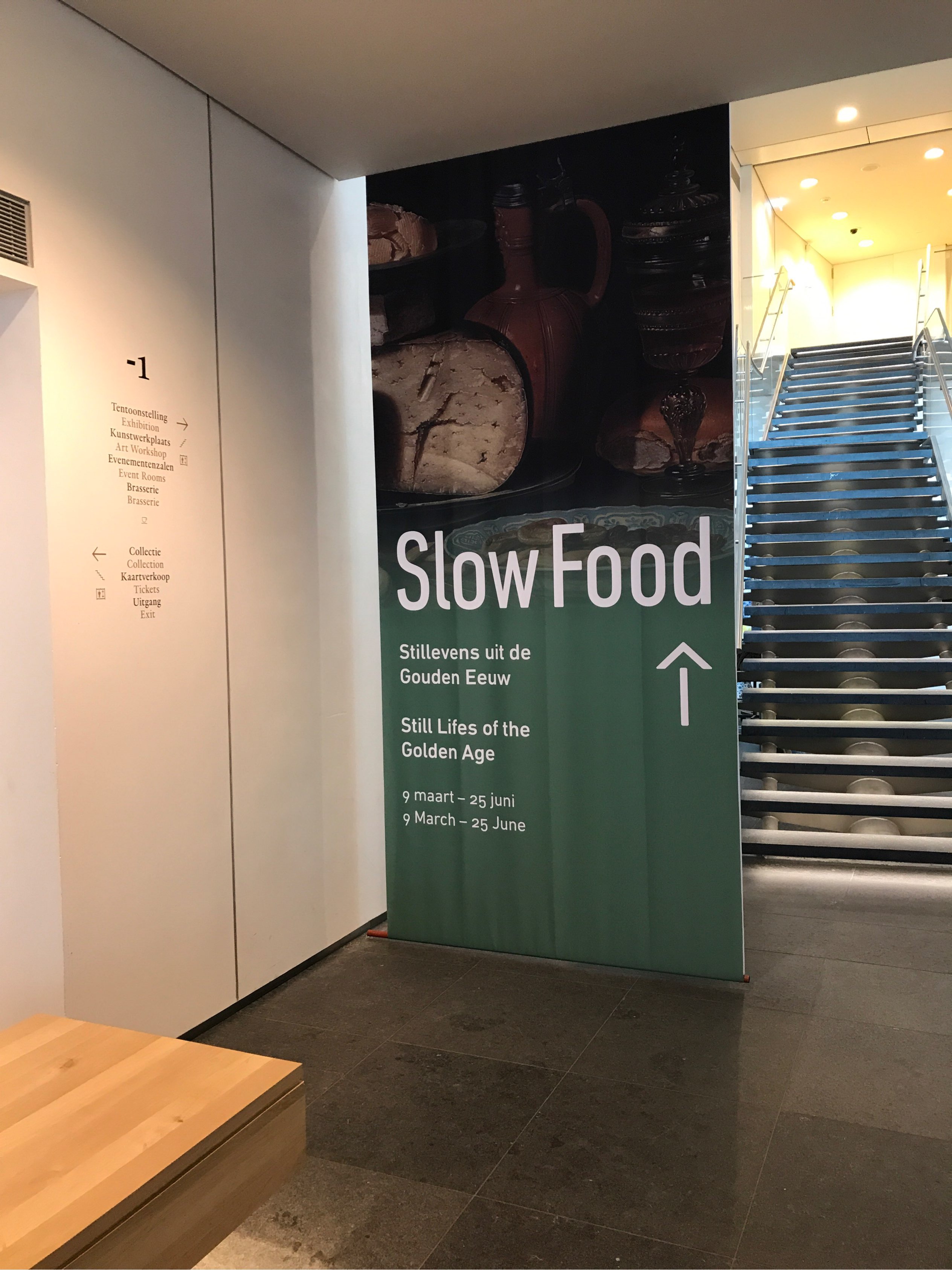
I arrived at the museum about 30 minutes before Andrew, and their temporary exhibit, Slow Food, caught my eye. (Of course.)  I had no idea what it was, but an almost supernatural force drew me to it.  (For what it’s worth, we almost never spend much time at museums’ specialty exhibitions.)  Slow Food is a compilation of Dutch artists’ food-themed still life paintings from the 1600s.  INCREDIBLE.  Incredible.  Despite their very ‘traditional’ look (I’m more of a modern art girl, myself), I fell in love with the pieces.  The colors.  The food. The styling.  The upturned glassware. The perfectly painted reflections and play of the light. This exhibit–by far–has been my favorite of any I’ve seen, and even rivals all the Impressionist works in the Musee d’Orsay in Paris.

We spent the rest of our time admiring both the interior of the Mauritshuis (only two floors of paintings in approximately 15 rooms, all ornately decorated) and the museum’s ‘biggies.’ Vermeer painted a similar work to ‘The Girl with a Pearl Earring’ and I’ll never know why her portrait (not of an actual person) didn’t rise to fame like the other.  (She wasn’t quite as pretty…)

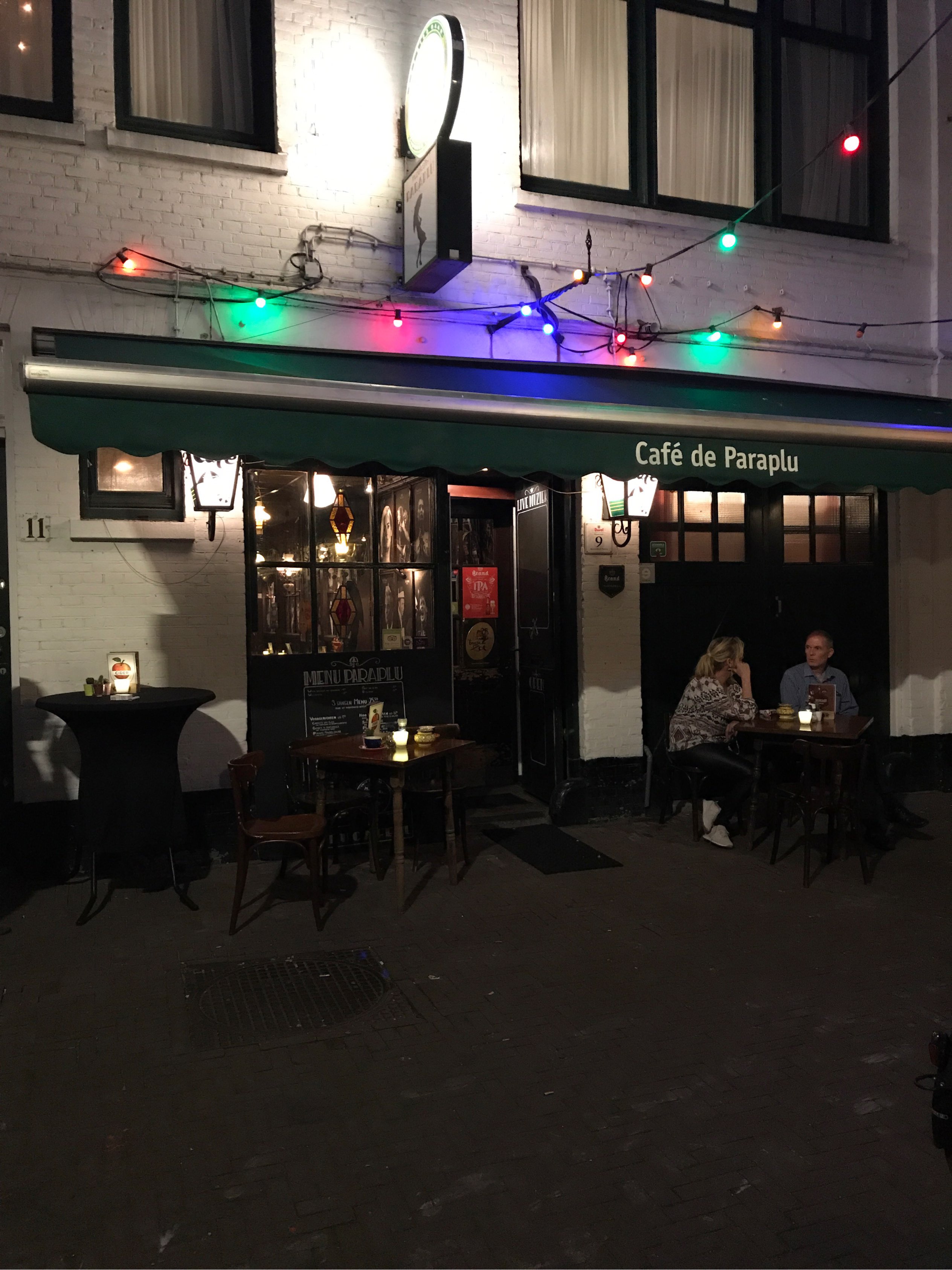
After the museum, Andrew and I wandered over to a lively square to join everyone else for happy hour.  We ended up at Café Paraplu for dinner, a little spot tucked away in a quiet corner of the city.