H/B/F 2017: In Bruges!

Nope, not the movie.  (We’ve actually never seen it; it’s on our to-watch list.)  Andrew and I departed Haarlem for Bruges via train after spending two weeks in the Netherlands. We stayed at B&B Setola, and we’re so glad we did!  We had the cutest room, met some new friends and even saw our hosts at one of the local watering holes on our bike tour, which means the place was LEGIT.

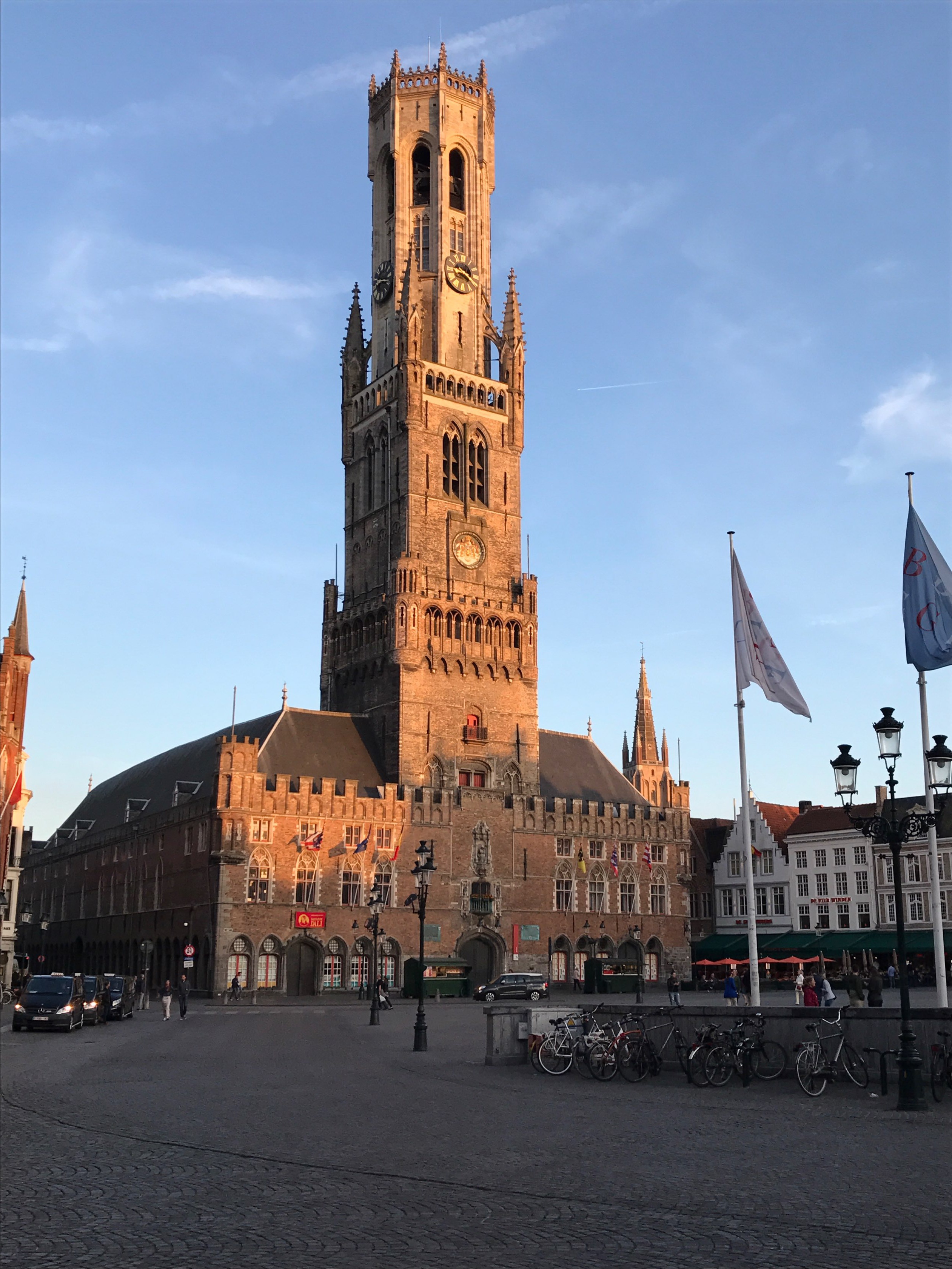
We took a walk around town and saw the main square:
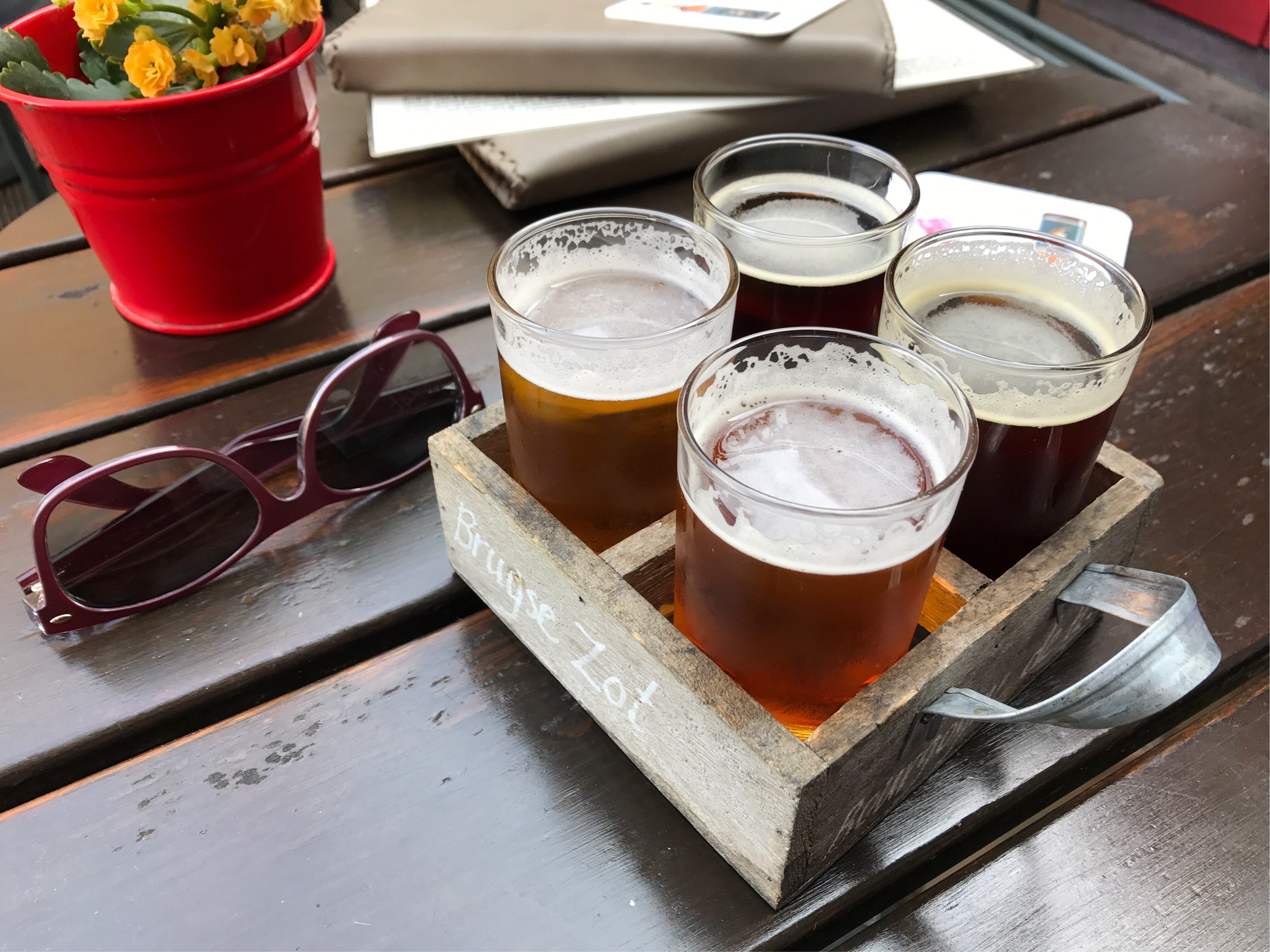
While out, we stopped at a local bar and I tried a flight of local favorites (we were in BELGIUM, after all), including Bruges Zot, brewed right in the city.  I tend to prefer amber and dark beers, but lighter brews are what’s in season now.  Thankfully, there always seemed to be a decent selection wherever we went.
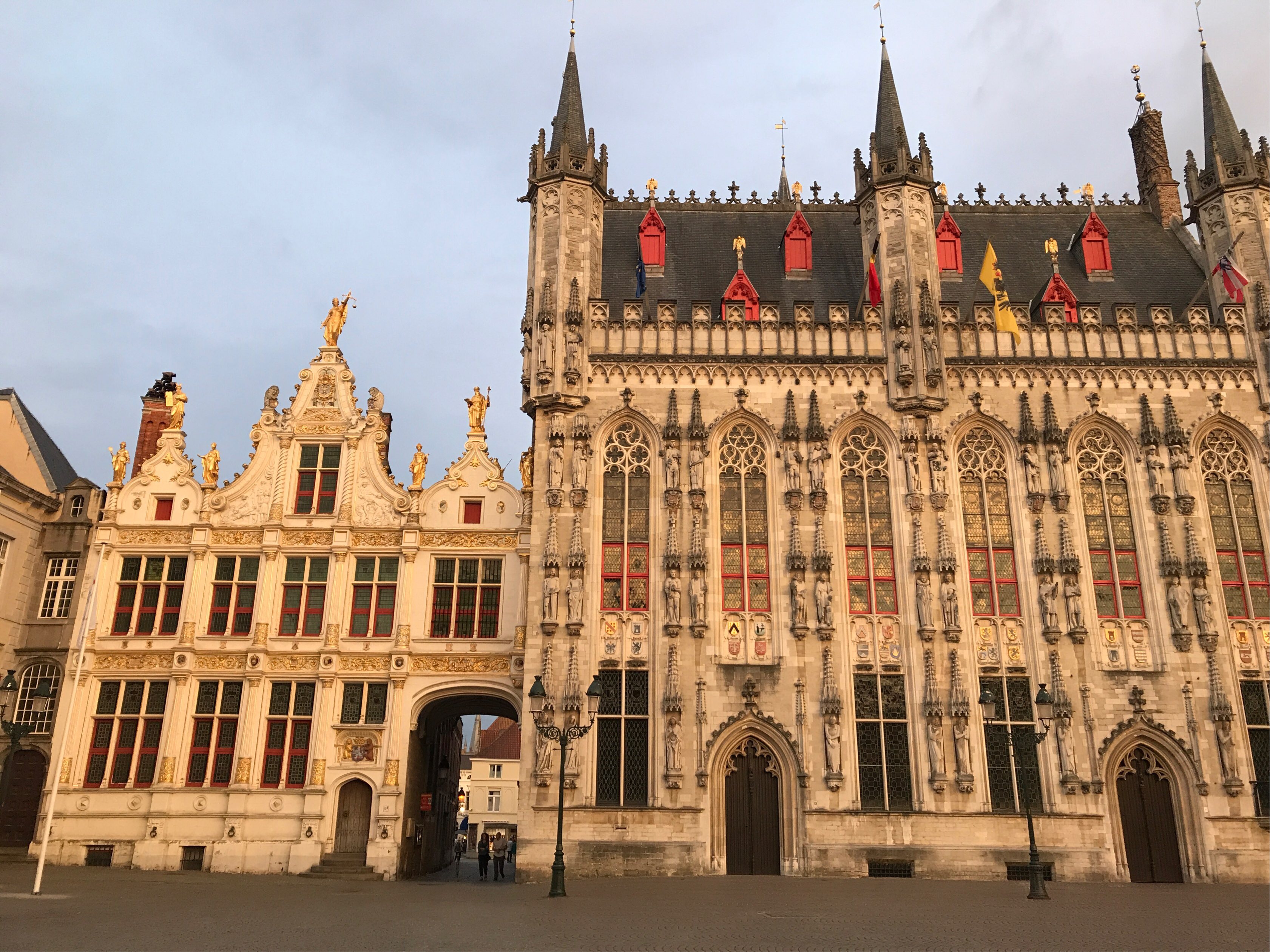
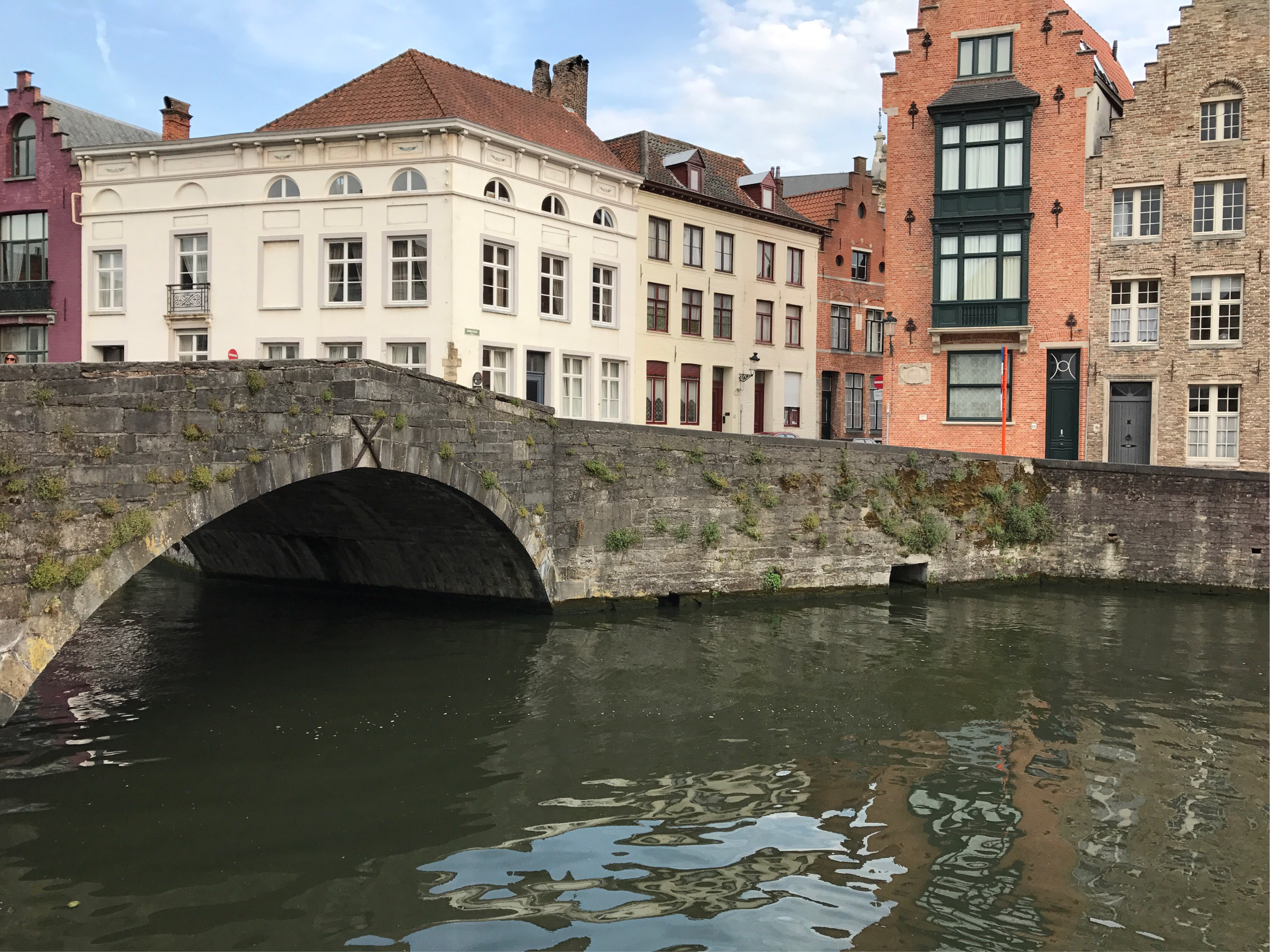
The sights in Bruges are simply beautiful, from the Burg Square:
to the beautiful canals:
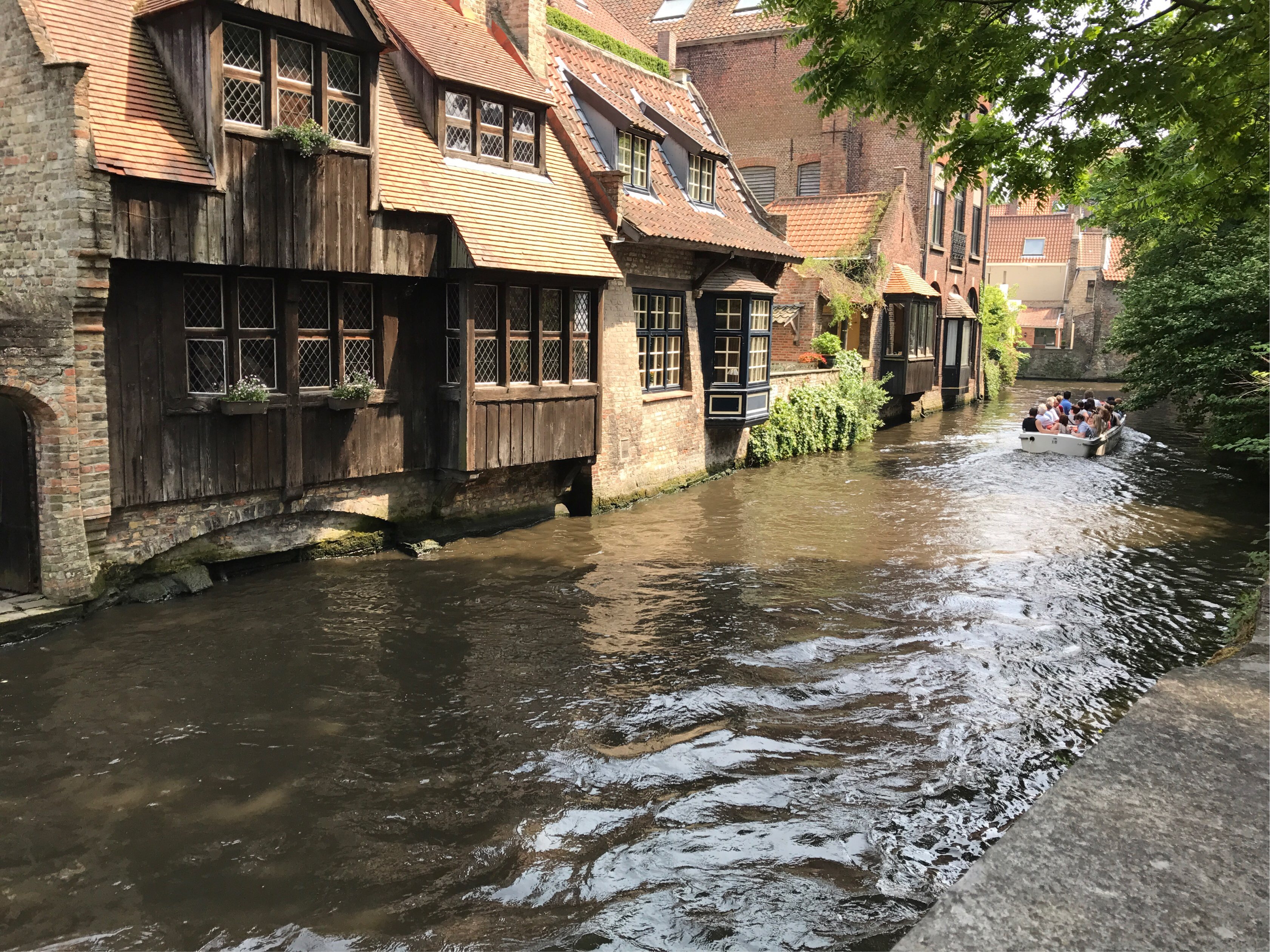
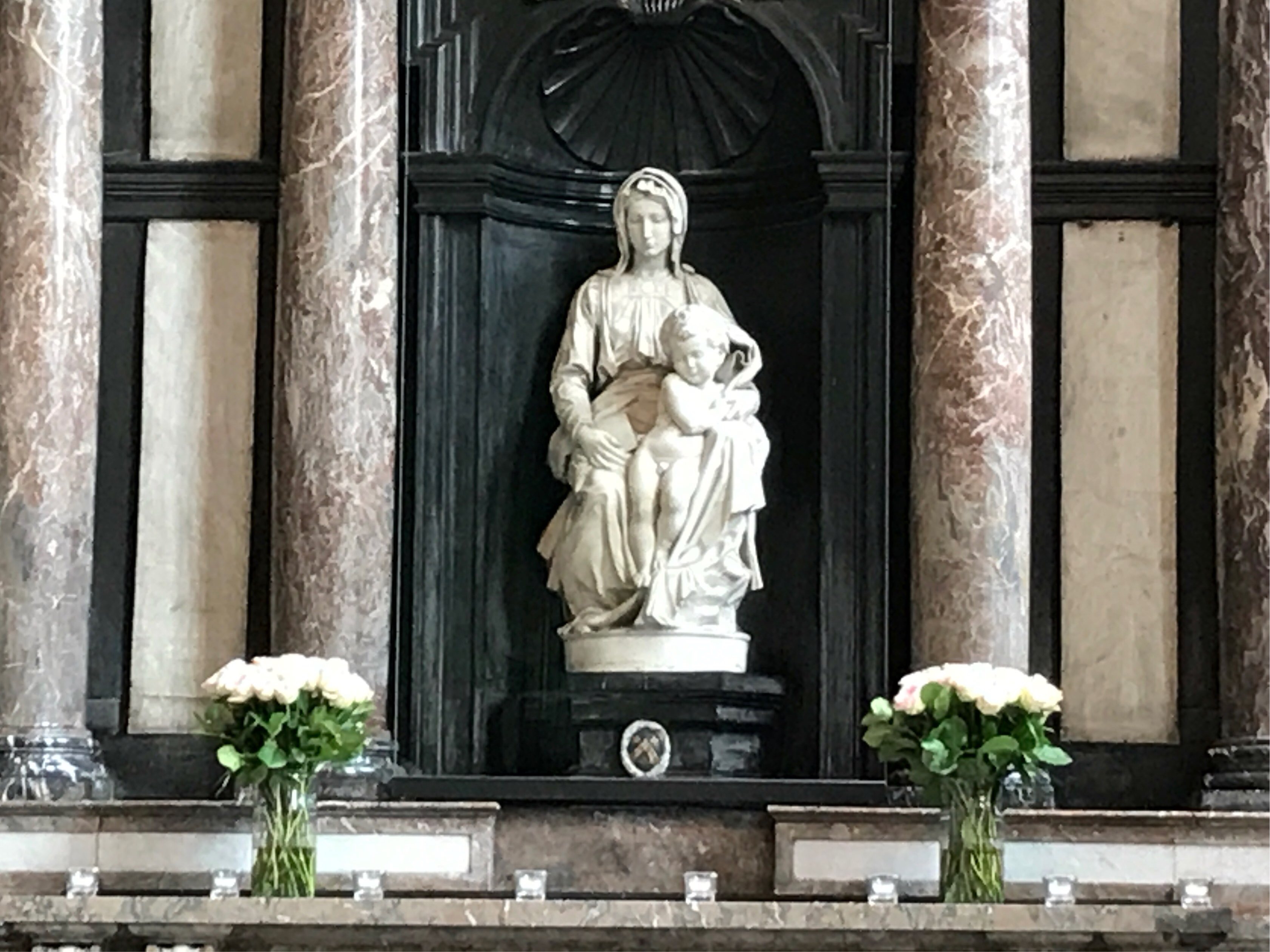
to the only Michelangelo statue outside of Italy, the Madonna of Bruges, housed in the Church of Our Lady:
c

On another day, Andrew and I took a tour of De Halve Maan Brewery.

On our last full day, we took a bike tour (usually a good idea on a FIRST day as an orientation, but they didn’t have availability) around the town, which we loved. Quasimundo did a great job, and our guide, Jos, was excellent.  We even met a British couple and ended up inviting them to join us for lunch at the fantastic restaurant we went to for dinner our first night.
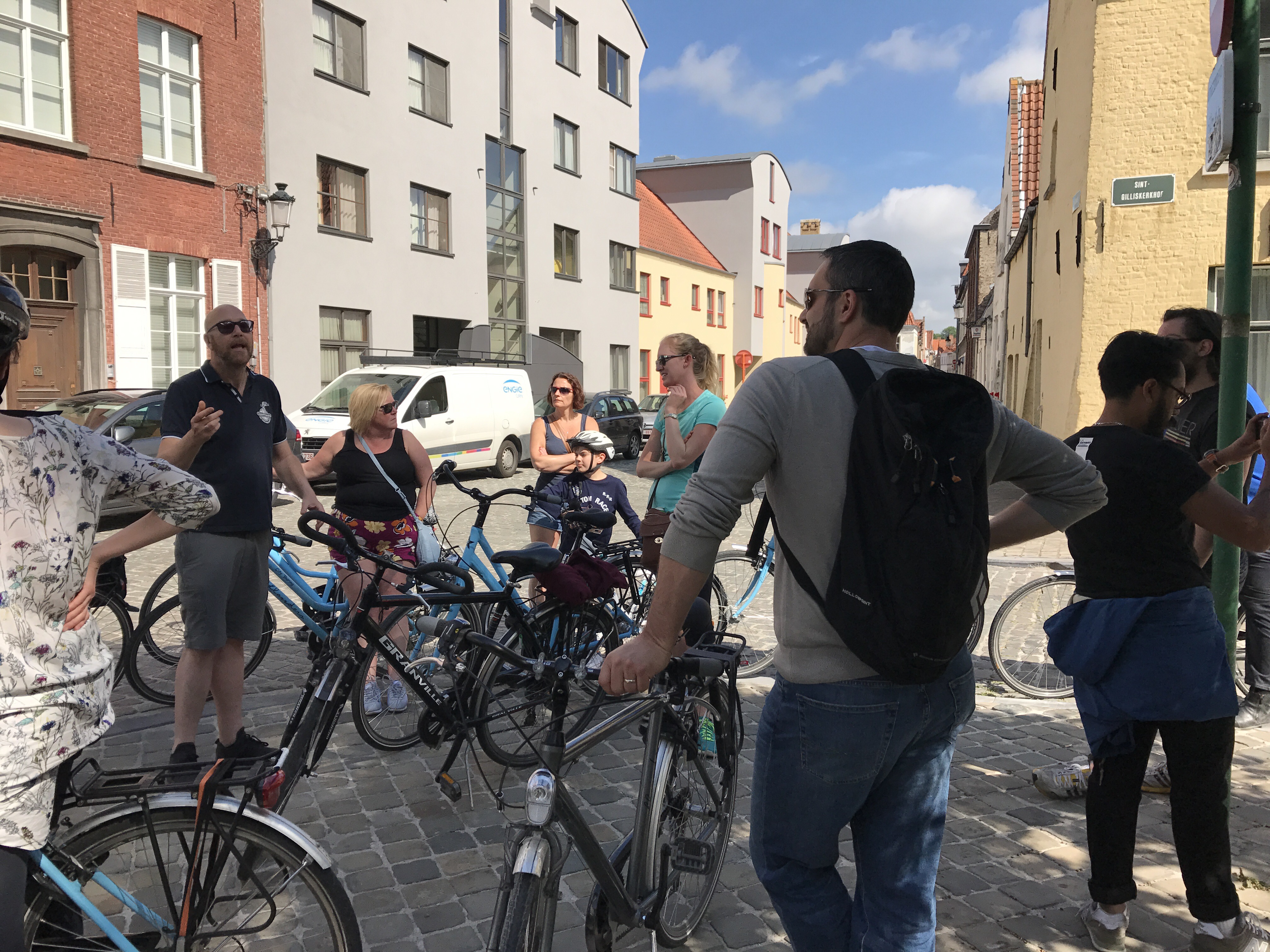
While on the bike tour, we visited a ‘beguinage,’ which is a home for nuns.  
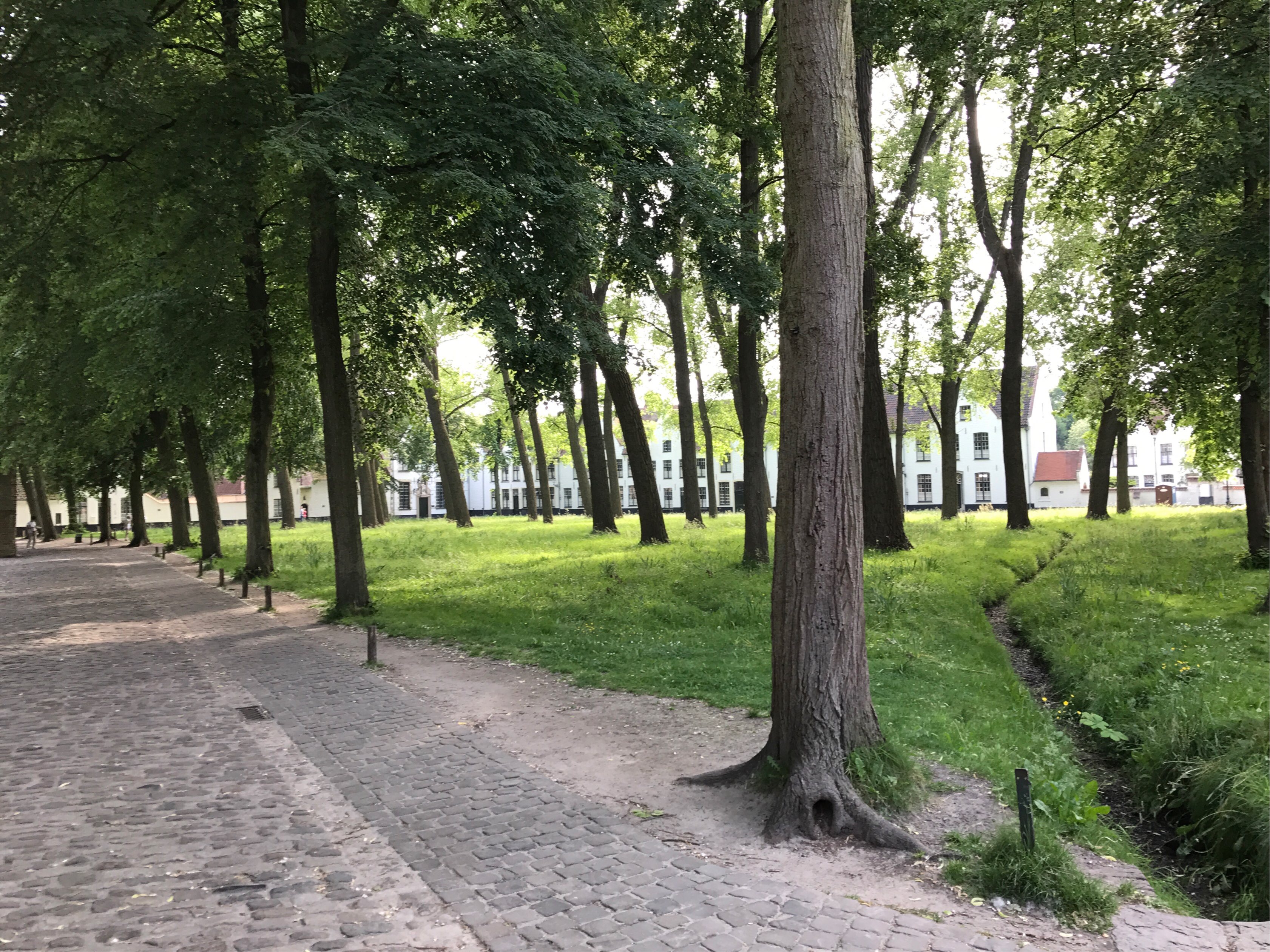
Other sights included Old St. John’s Hospital:

As well as the Groeningemuseum, where we saw EVEN MORE Dutch Masters:
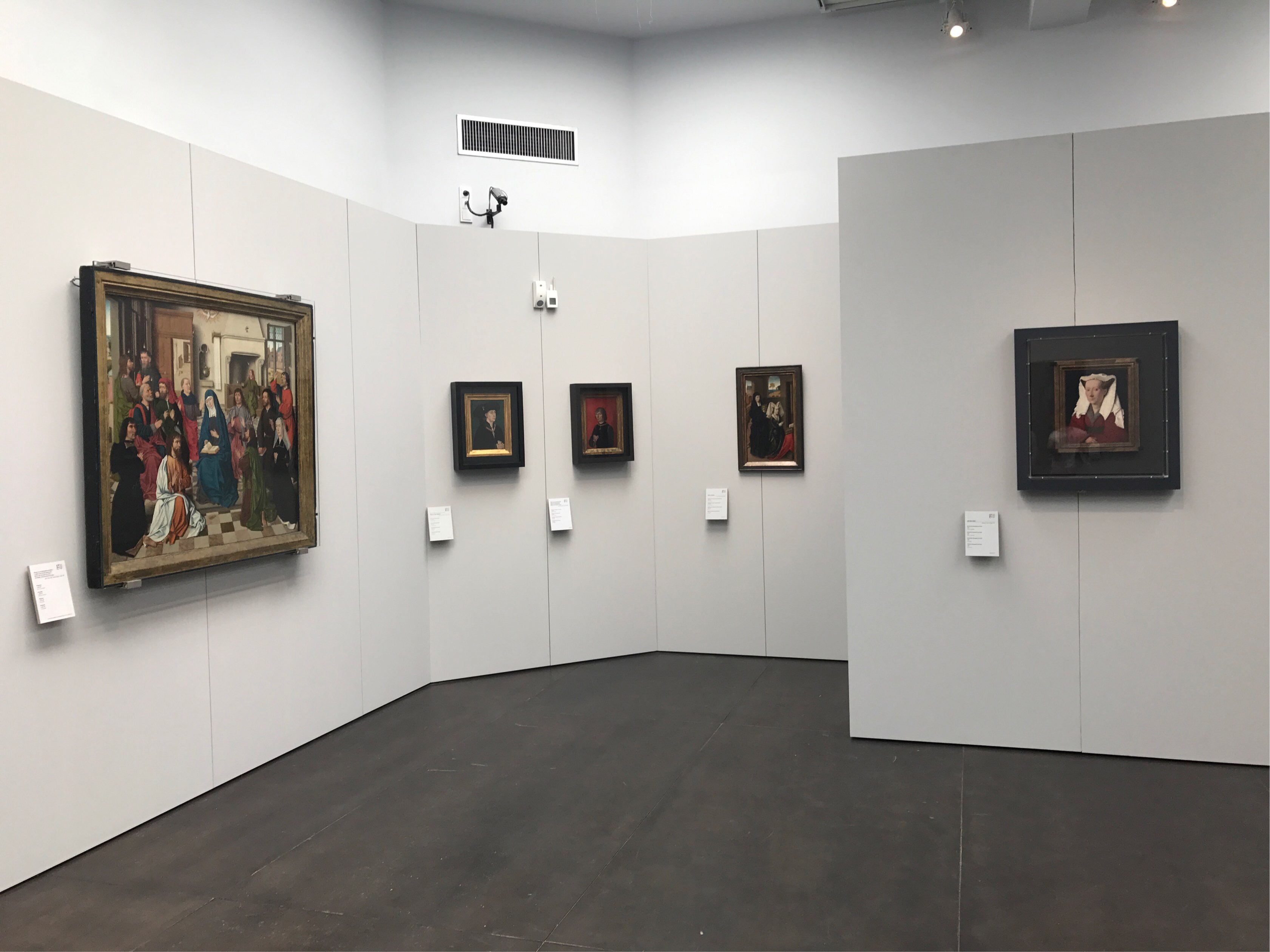
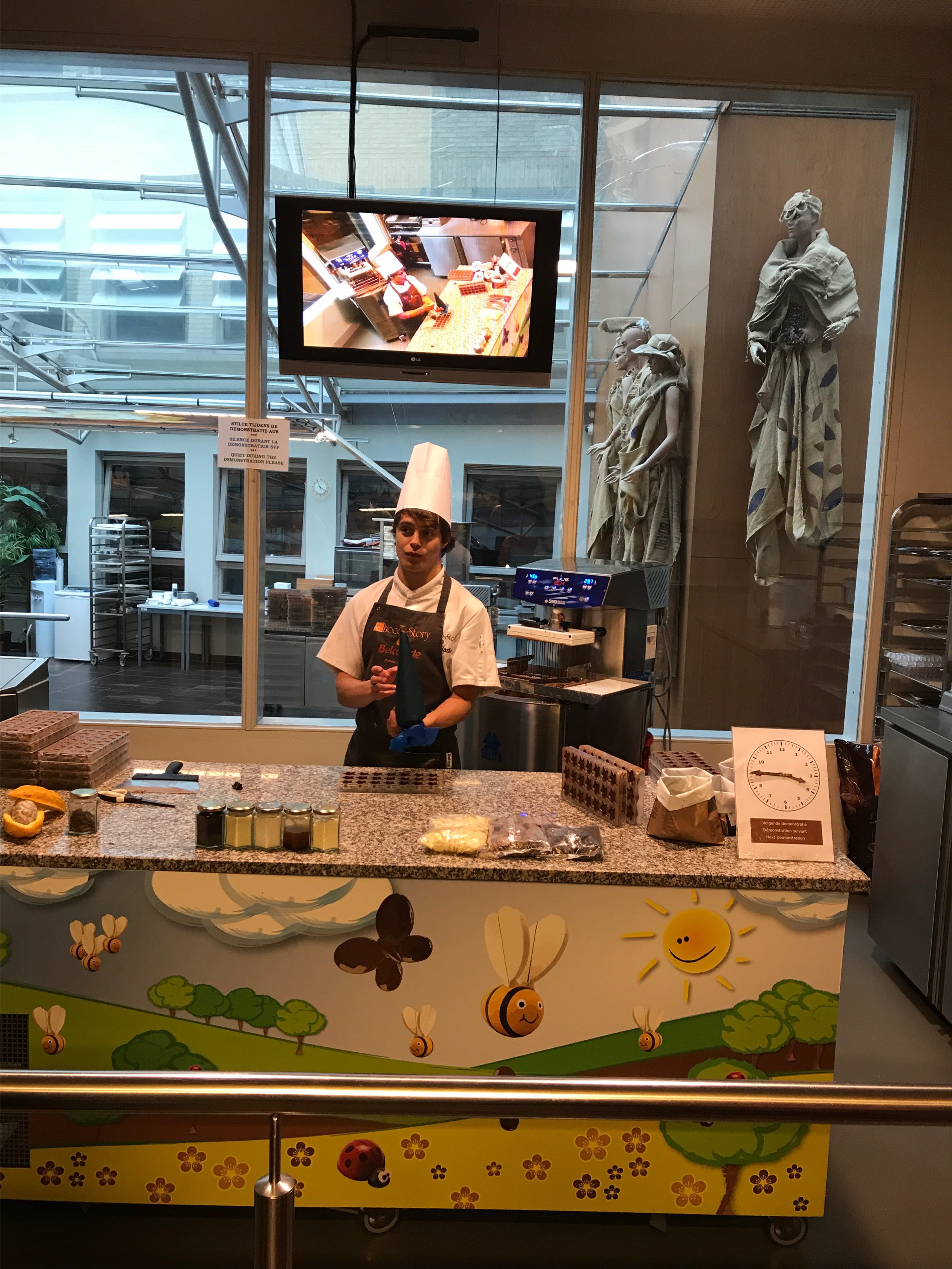
We visited Choco-Story, the chocolate museum, which featured a live demonstration after presenting an incredibly thorough history of chocolate and the process by which it becomes the sweet treat we know today. In Belgium, the term ‘praline’ refers to any filled, hard-shell chocolate.
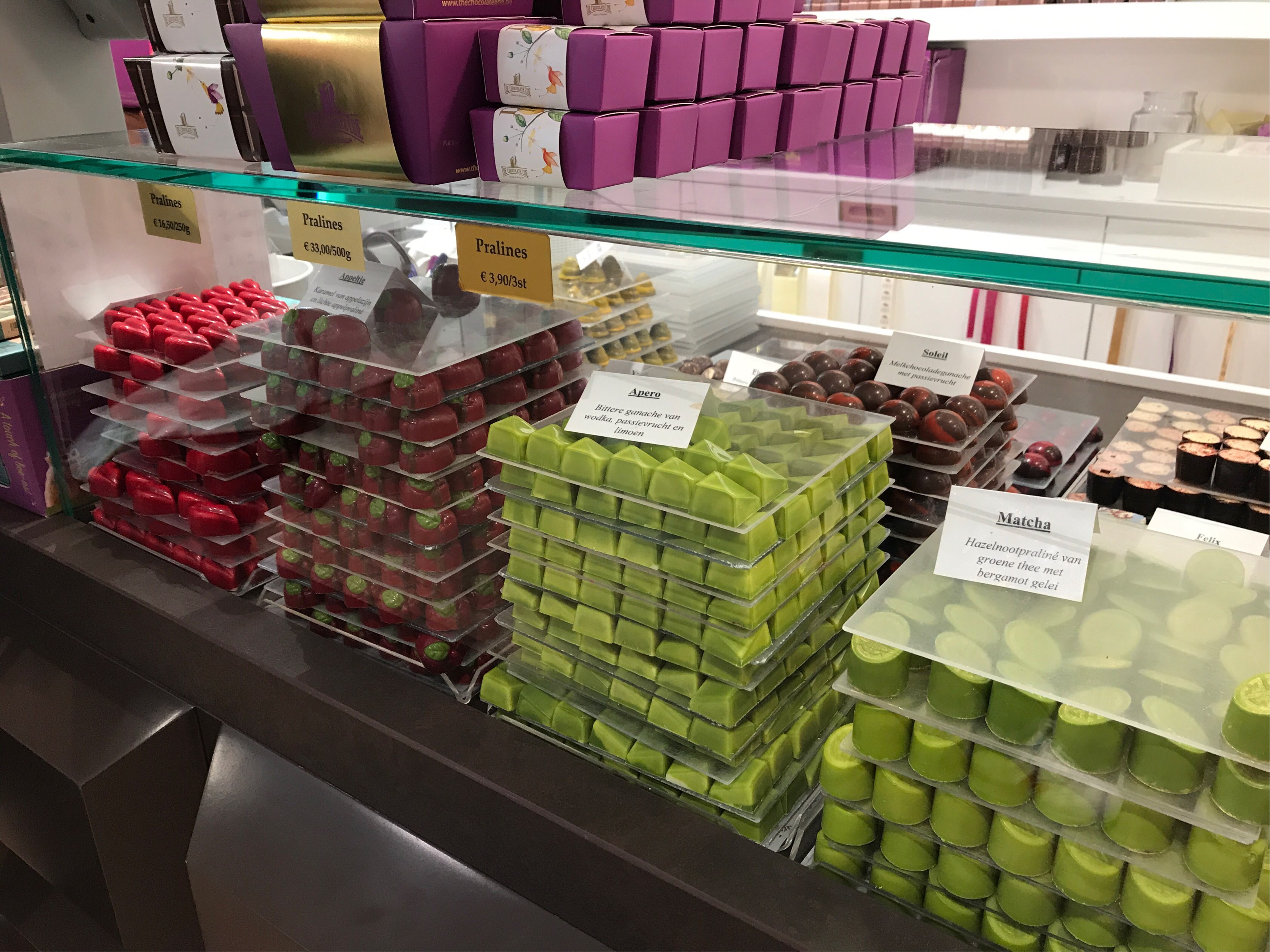
Obviously, we wanted to try some special chocolates.  We visited The Chocolate Line, known for its inventive flavors, including fried onions (a sweet/salty combo that leaves you with a distinctive ‘onion’ taste), Cuban cigar, chili pepper and more.  Andrew and I brought a small box home and are still working our way through it.
One new thing we did on this trip was mail some of our souvenirs home.  We collect books from the art museums we visit, and because we did SO MANY in the Netherlands, we managed to amass a non-trivial amount of big, heavy books.  At the advice from our new friends at our B&B, we decided to try mailing a box home with our books and some souvenirs to lighten the load, and boy–we were glad we did!  While it might have been a *small fortune* to mail, not carrying those books and a couple bulky items for two more weeks was priceless. 
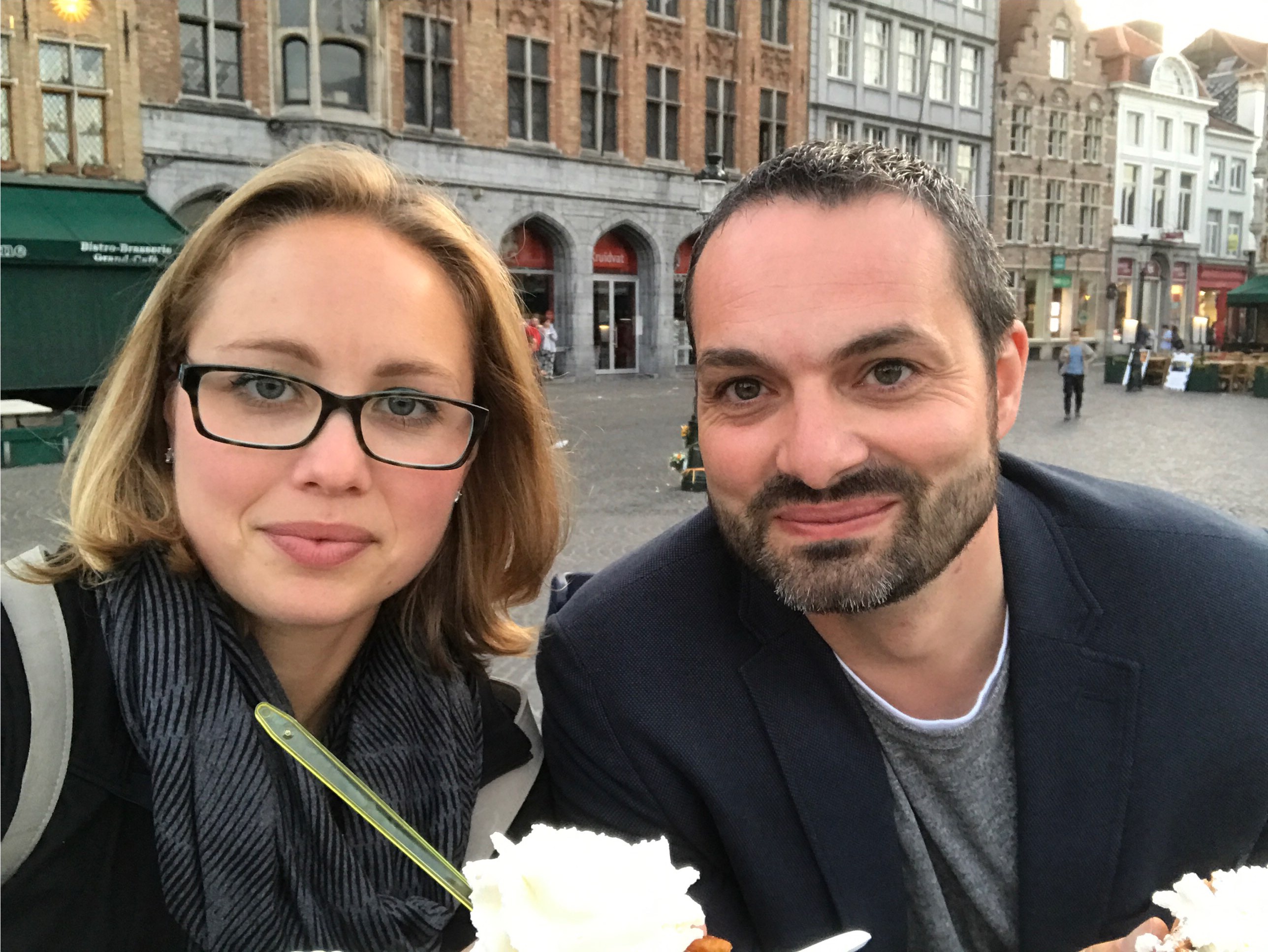
On our last night in Bruges, we made sure to get waffles topped with ice cream. We chose a little window making them fresh and mine might have been one of the most delicious things I’ve ever eaten. 
H/B/F 2017: a slice of life in the Netherlands

Before I leave the Netherlands and the first half of our trip behind, I thought I’d share some observations about life here in Holland with you all.  It’s really very similar to other places in Europe, and the subtle differences seem to make us feel more ‘at home’ than less.  This makes sense when you remember that the Pilgrims actually came from here (Leiden, to be exact) before heading to the new world, and that New York City is modeled after Amsterdam (remember ‘New Amsterdam?’) and it follows suit that our Harlem in NYC is modeled after the Haarlem in which we stayed.  The Dutch are kind, pragmatic and happy to speak in English to visitors without hesitation. (English truly is the ‘universal language’ here, and the Dutch will respond “of course!” when questioned if they speak it.)

img_3469

Something I do appreciate when traveling is a good old European breakfast. Many countries here simply offer a croissant and espresso in the morning (I’m looking at you, Italy and France), but the Netherlands embraces the breakfast I saw in Germany when Andrew and I started traveling 10 (!!!) years ago: cold cuts and cheeses, tomatoes, fruit and hearty breads.  These people know how important protein in the morning is!  (It stands to reason–the Dutch are among the world’s tallest and healthiest populations.)  I can’t tell you how much the breakfast issue has come into play on our trips overseas; I feel like I’m constantly in search of a protein option in France!  This is also one of the reasons Andrew and I have started staying in apartments on our trips instead of hotels if we’re staying for multiple nights. Thankfully, our hotel in Haarlem offered a FANTASTIC breakfast with all the goodies, including an assortment of breads, meats, cheeses, an ‘American breakfast’ with bacon, sausages and scrambled eggs (the best I’ve ever had), fruit, tomatoes, cucumbers, yogurts, granola and muesli, as well as juices and an insane coffee machine that basically creates a ‘Starbucks-in-our-hotel.’ We were in heaven every morning.

Meal times are different here, at least for dinner.  Europeans tend to eat later, and the Netherlands seems to be somewhere in between the US (5-6 pm) and France, Italy and Spain, which ascribe to a dinner hour between 8 – 10 pm (at least in the big cities). We don’t even head out until about 7 pm, and even that’s a bit early.  Usually we’re grabbing a drink at a café after 6 pm, then hunting down just the right place for our evening meal afterward.

img_3474

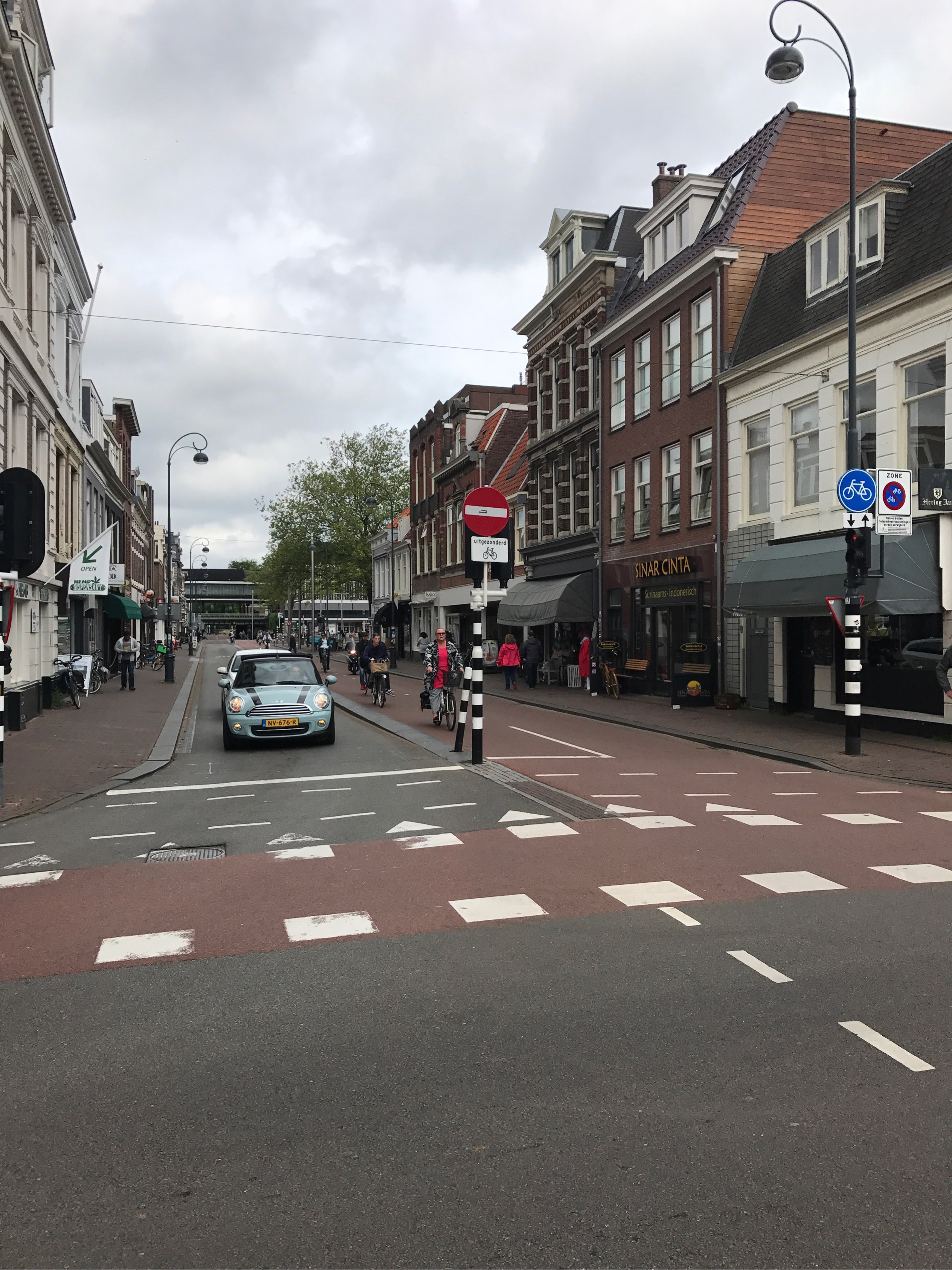
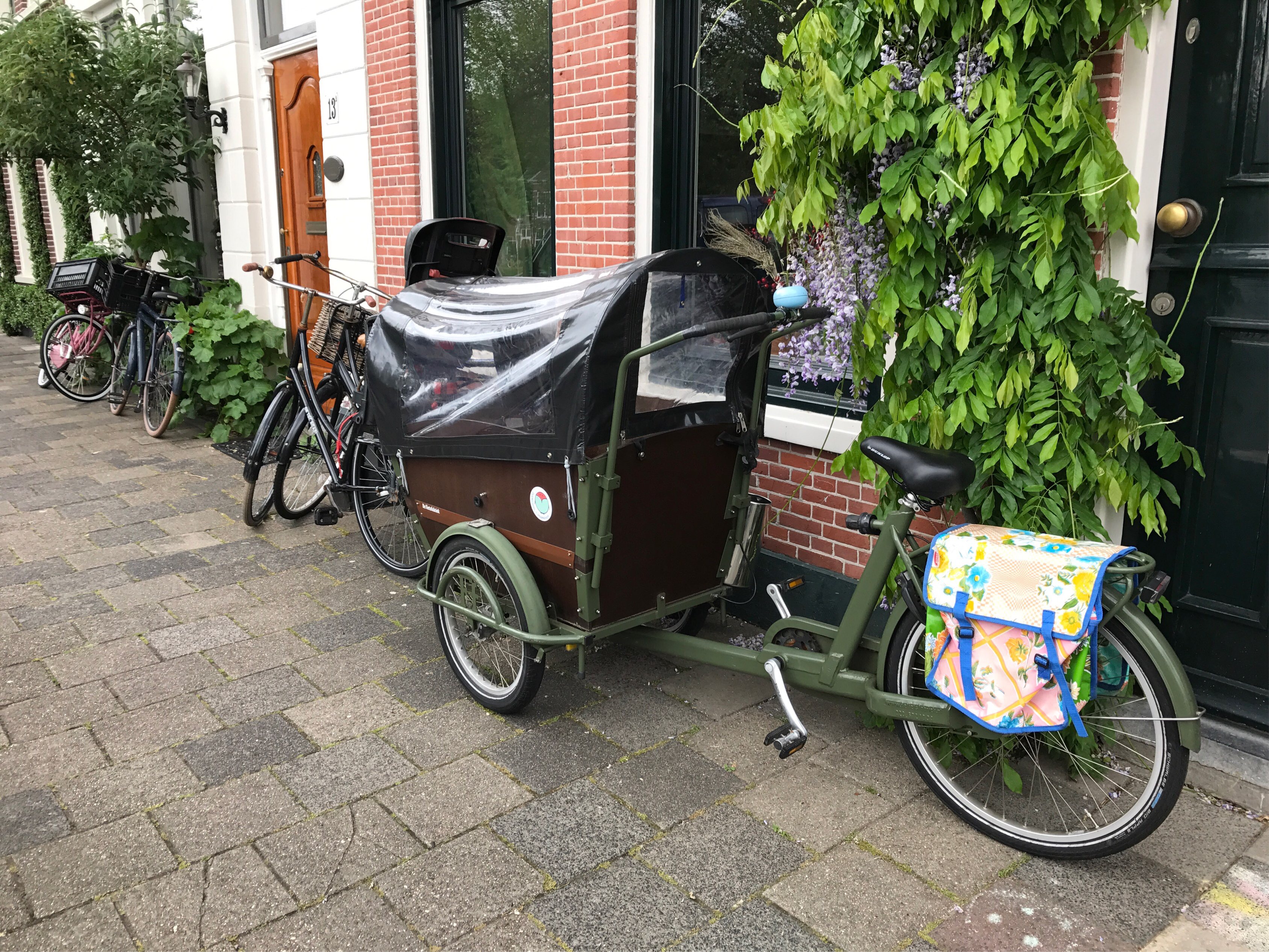
The Dutch are also known for bicycling EVERYWHERE, and Haarlem is no different.  There are distinct bike lanes alongside the roads, parking garages for bikes (equipped with ‘troughs’ on each side of the stairs for riders to wheel their bikes up and down, see photo below) and large wooden buckets that attach to the front for small children or things to ride in.  I even saw a toddler and an infant in a car seat tucked away in a the basket riding around town!  No one wears helmets and I’m sure accidents are few and far-between.

img_3496

You’ve probably heard that pot is legal in the Netherlands.  Yup, it is.  And while marijuana is indeed legal, it’s not (or doesn’t seem to be) a problem.  (Click here for more info on the drug policy in the Netherlands.) Before visiting, I think I had visions of hippies living on canal boats in Amsterdam, basically, that because pot was legal, the city would be somehow different.  In reality, Amsterdam is just like any other old European city, if not more beautiful.

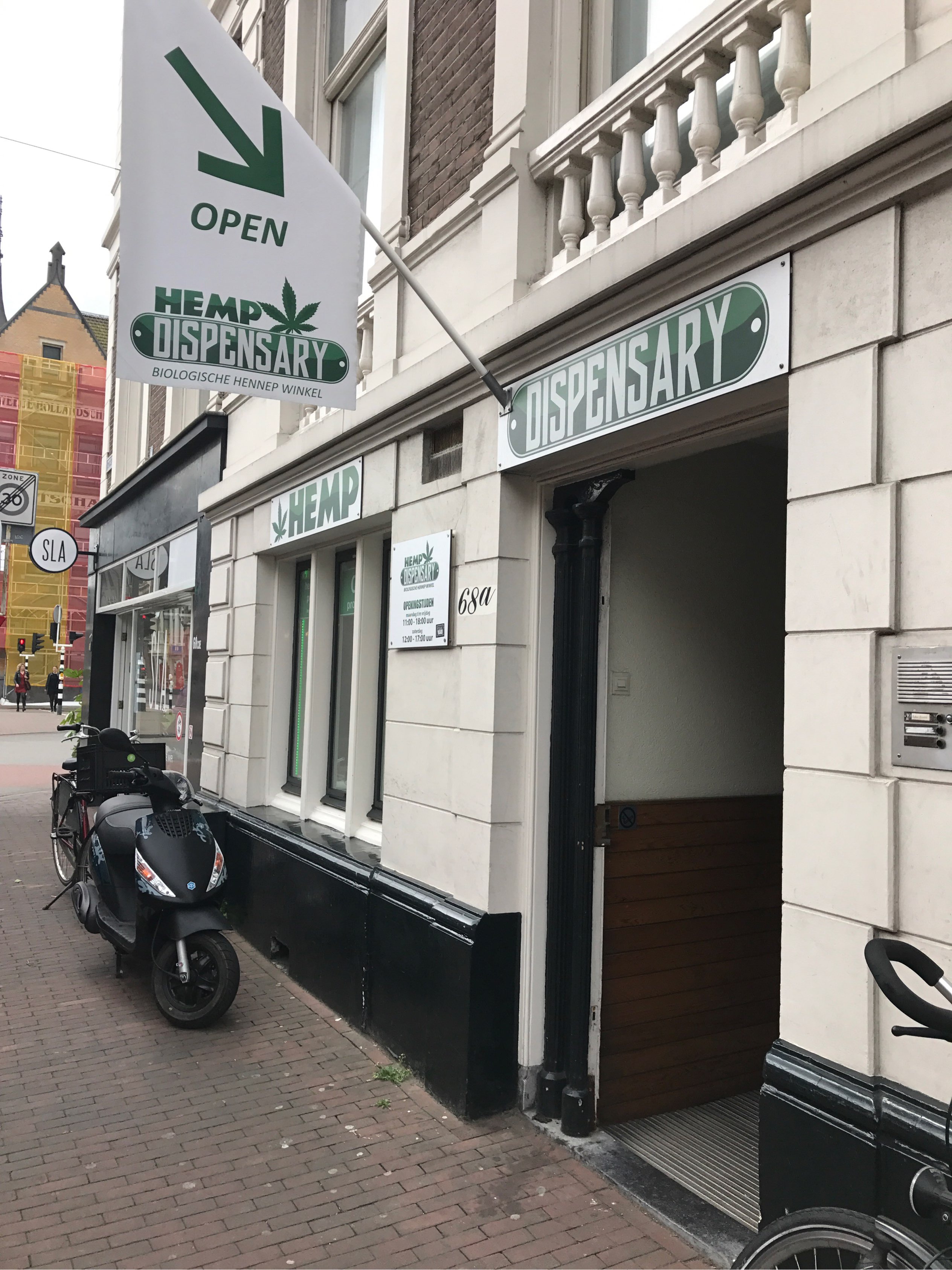
The only evidence of marijuana I saw, or smelled, was wafting from the doors of ‘coffeeshops,’ not to be confused with cafes, that actually sell COFFEE. It’s legal all over the Netherlands, not just in Amsterdam, so there were some pot ‘dispensaries’ in Haarlem, too.  Coffeeshops are highly regulated, and it’s illegal to have large quantities of pot on hand at any given time. Users can’t grow, sell or smoke pot at home; they must partake inside one of these coffeeshops.

img_3475

When we talked to some of Andrew’s co-workers at dinner one night, I asked what the general consensus was on drug use.  While none of the Dutch engineers seemed particularly ‘pro-drug,’ they did take a very laid-back approach to the issue.  They all seemed to think it was fine that pot was legal and that they’d never thought of it as a problem.  In fact, they remarked instead about the drug problems in the US, where pot is illegal (except in some states). This attitude is exactly how our guidebook described it, which aligns with the often pragmatic approach the Dutch take to issues like this.

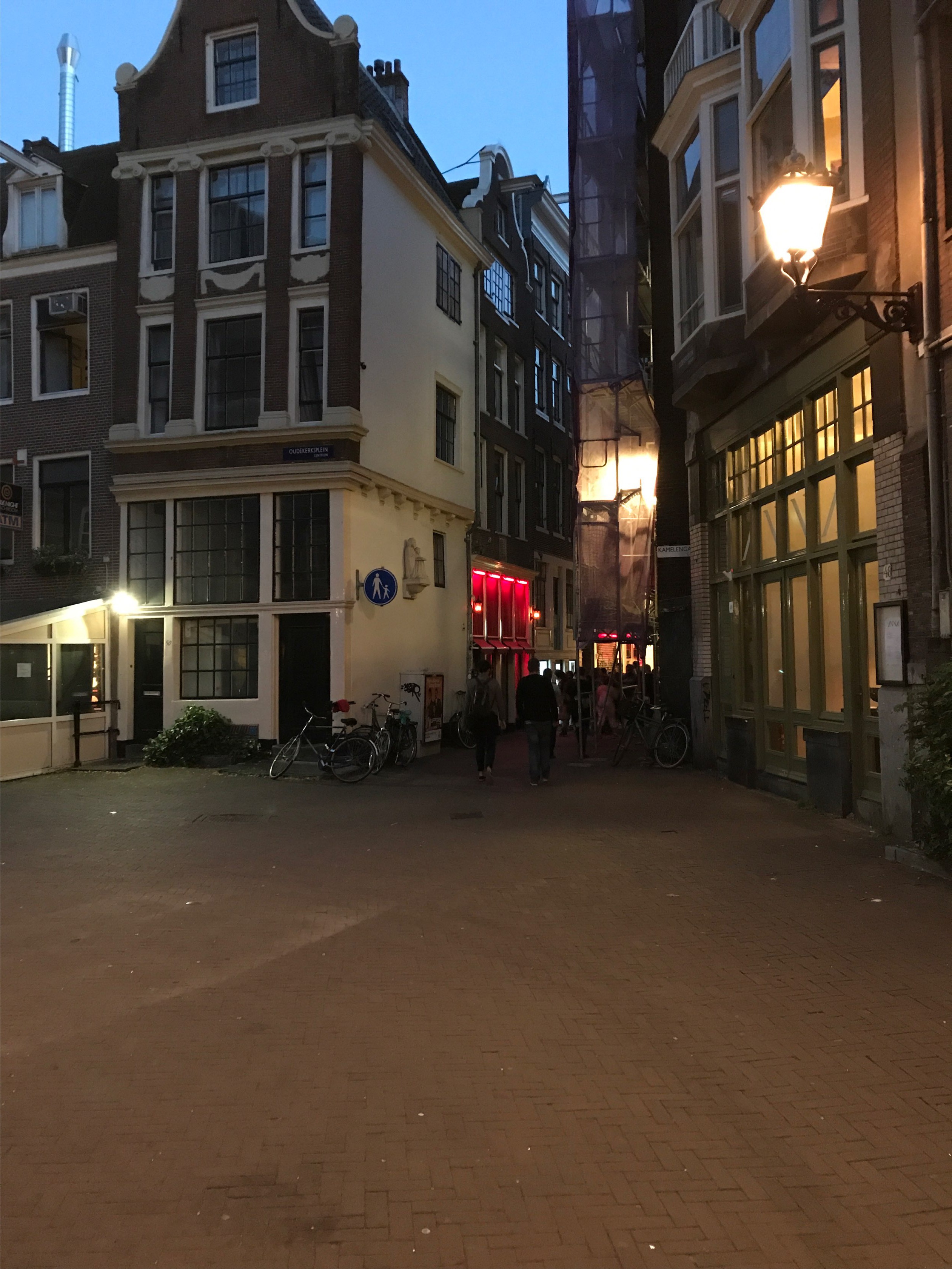
Lastly, in addition to pot, prostitution is legal, too. Ever heard of the Red Light District?

The photo above is rather tame, as I was careful not to take pictures too close to the action.  And what I mean by action is that of all the tourists, not the prostitutes!

Andrew and I followed a Red Light District ‘walk’ in our guidebook one evening well before the area gets creepy at 1 am.  We were a bit nervous going into it, but the further along we went, the more and more crowded it became.  To be honest, it felt a little like Disneyland!  Yes, there are red-lit windows in which women stand in the equivalent of a bathing suit, most of them paying almost no attention to the crowds walking by and instead playing on their phones.  It felt more like a theme park as we shuffled along with the crowds and less like like a place someone could approach a hooker.  There are streets upon streets in the area that glow red each evening, filled with tourists.  Anyone visiting Amsterdam should do it once, and once is enough.


H/B/F 2017: adventures in Amsterdam

Because of Andrew’s work schedule, we ended up doing Amsterdam in several chunks of time: a few evenings, half days and full days.  Here’s a recap of some of our highlights:

One evening, we decided to try our luck in the line at the Anne Frank Museum.  Lines are historically long, and morning reservations are made online months in advance; by the time I checked they were all gone.  So, every day after 3:30 pm, hundreds of people wait two or three hours to get in.  Thankfully, they’re open late (until 10 pm!) to accommodate so many visitors.

Knowing we might not eat until very late that evening, we grabbed some fries to go (with mayo for me, of course) and rode the train into the city.  Fries are definitely a thing (in both Holland and Belgium) and they. are. delicious.  They are definitely different than our fries here–slightly larger than traditional size but smaller than steak fries–and not greasy at all.  They’re sold out of fry shop windows in little cones, perfect for on-the-go snacking.  I started eating my fries with mayo in college (no idea how that started), and that’s how they like them in the Netherlands.  Other sauces are available, including a peanut satay, but ketchup isn’t very popular.

Below is a shot of Amsterdam Centraal, the main train station.  I love that train stations overseas are typically grand buildings.

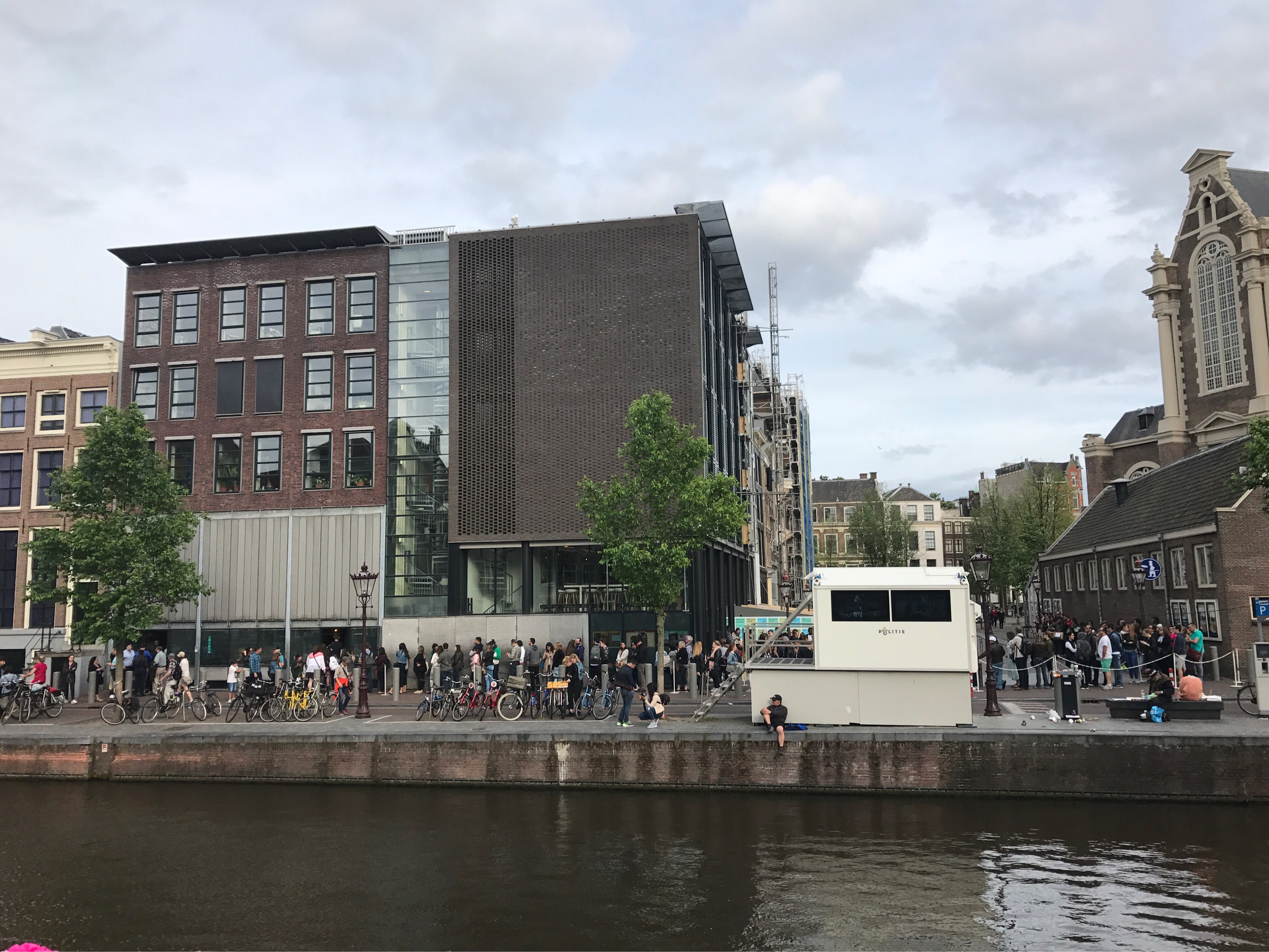
We walked to the Jordaan District, which is where the Anne Frank Museum is.  In the photo below, you can see the line starting in the lower left and wrapping back and behind the white structure in the foreground and then along the side of the building on the right.  The original entrance is just outside of the photo to the left.  We only waited about 45 minutes that evening to get in, which was a huge blessing.  The museum includes the actual ‘secret annex’ where the Franks, Hermann, Auguste and Peter van Pels, and Fritz Pfeffer hid, Anne’s original diaries (mercifully spared during the raid) and other artifacts and displays from that time period.  While the furniture is all gone, the walls of the annex still have the pictures and newspaper clippings Anne had glued to them.  It’s a quiet and somber place, knowing the fate of those who lived there.

On a day trip to the city, Andrew and I started with Rick’s walking tour of the city, which brought us to Damrak and then to Dam Square, which is home to the Royal Palace.  It was once so grand, it was referred to as the ‘Eighth Wonder of the World.’ It’s still used today for official functions.  We toured the inside, marveling at the cavernous great hall, decorated with giant maps in the marble floor.


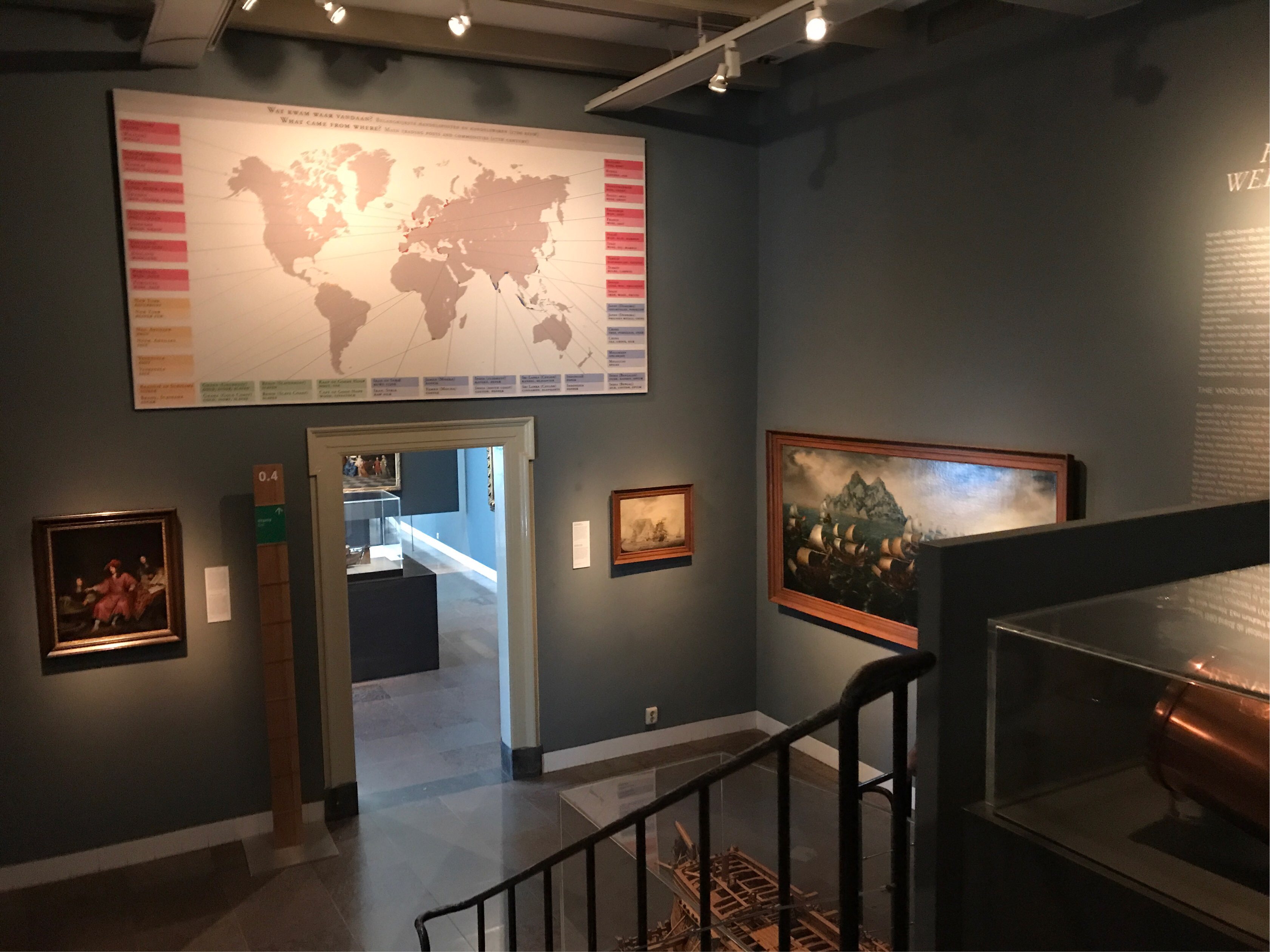
Continuing along the walk, we came to the Amsterdam Museum, which presented the history and current statistics of the city in a fun way using their ‘DNA exhibit.’  The museum includes interactive spaces (see Andrew, below, on a bicycle; as he pedals, the video progresses in time to modern day), models (see the Royal Palace, below next), artwork and even an almost-full-size replica of the first gay bar in the city (last photo).

After the museum, we needed a snack!  Thin pancakes (very similar to crepes) served rolled, filled and sliced are big here, so we went ahead and indulged ourselves. I chose strawberries with salted caramel sauce and vanilla ice cream.

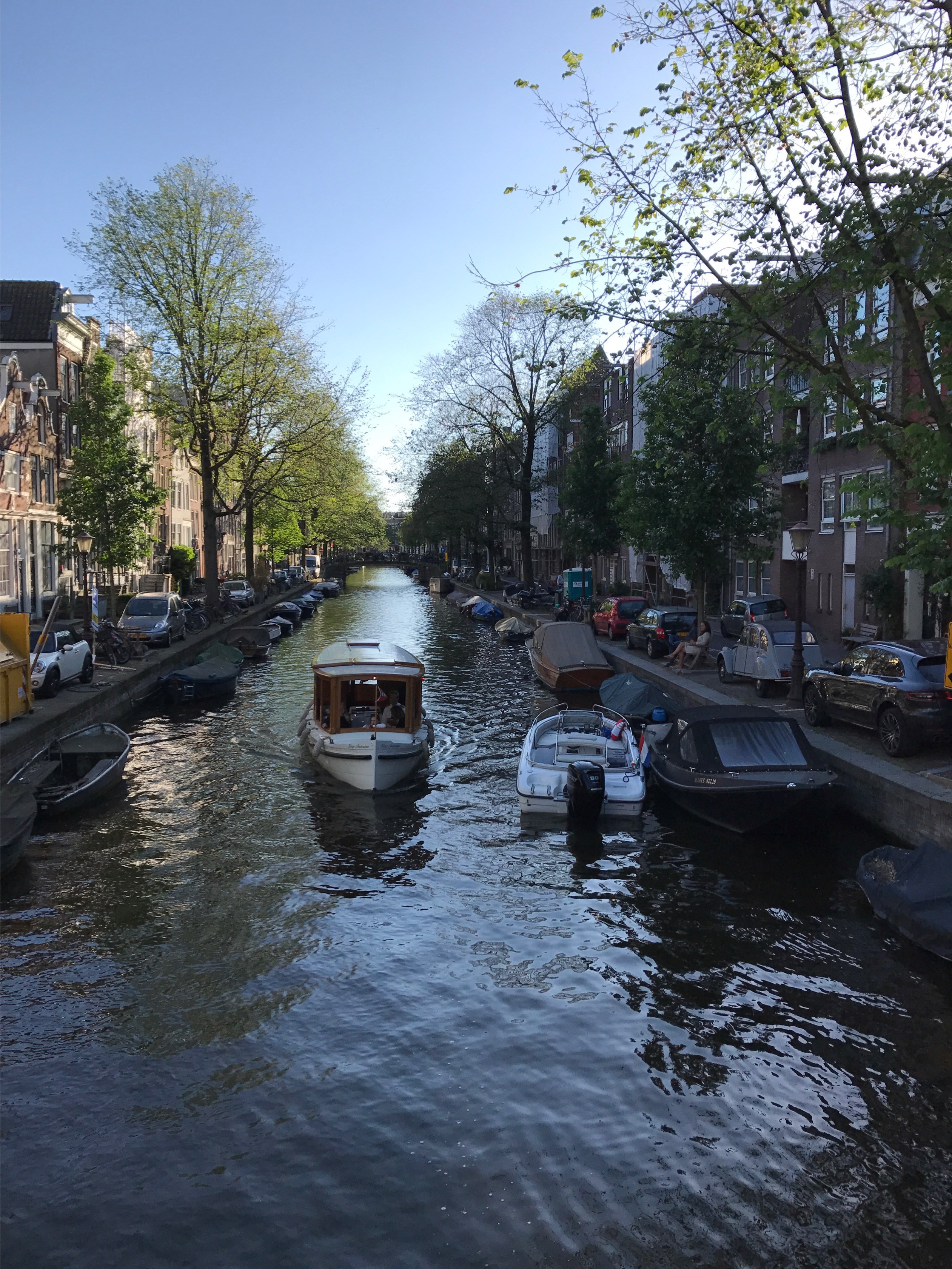
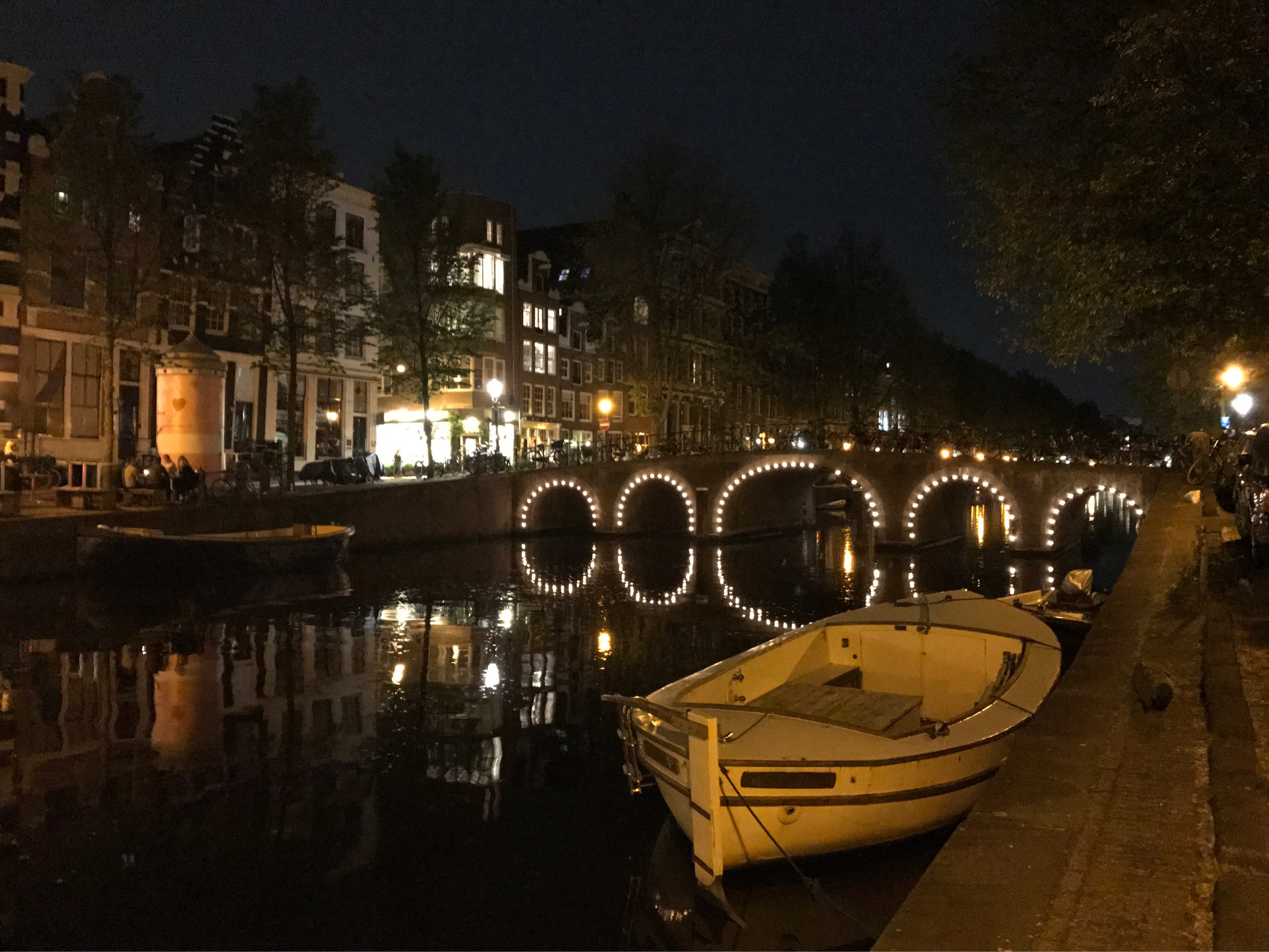
Amsterdam is known for its beautiful canals.  We didn’t take a canal boat tour this visit, but on a future visit we’d like to go on one of the smaller tours or perhaps even rent our own little craft and adventure on our own!